



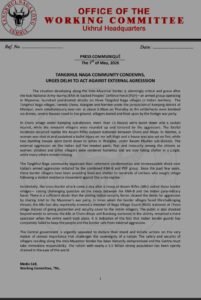
Senapati, May 8: The Working Committee of the United Naga Council has issued a strongly worded condemnation over what it described as a “barbaric cross-border invasion” carried out by Myanmar-based armed militants and Kuki militant groups operating under the Suspension of Operations (SoO) agreement, following fresh violence along the International Indo-Myanmar border in Manipur.
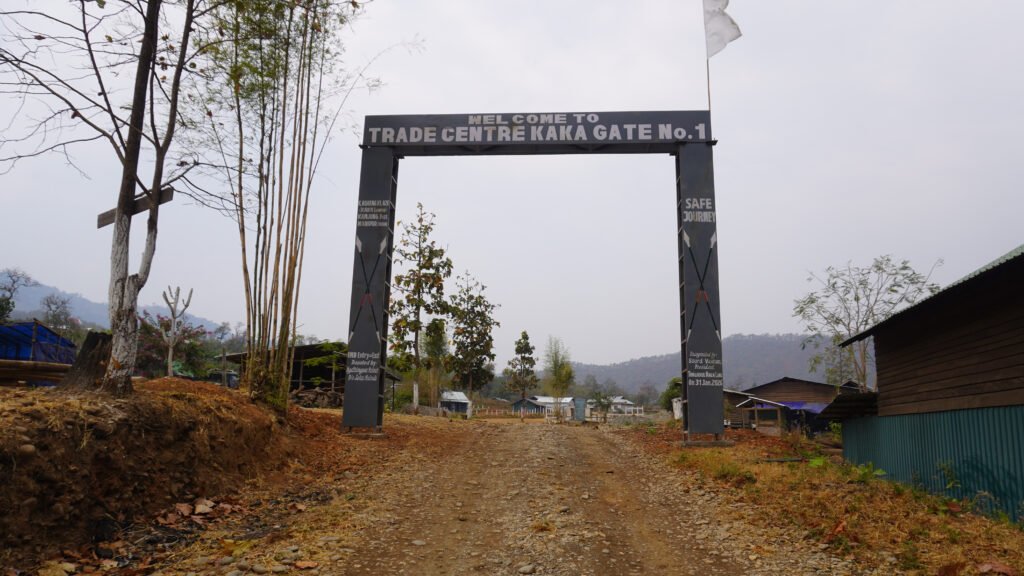
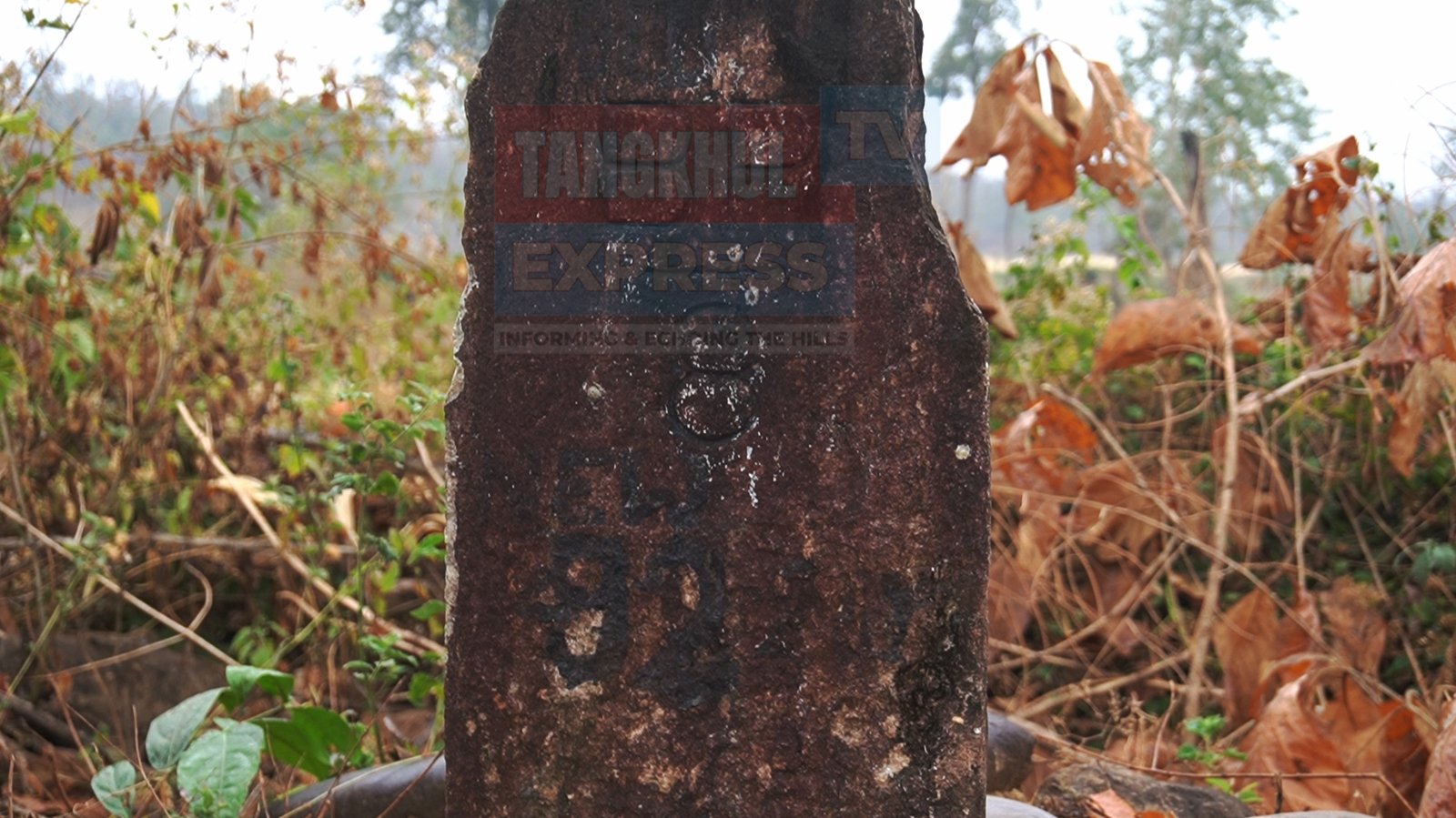
In a press communique titled “Vehement Condemnation of Cross-Border Aggression Against Naga Villages Along the International Indo-Myanmar Border,” the UNC alleged that heavily armed militants identified as KNA-B and other Kuki armed groups launched coordinated attacks on Naga villages, including Namlee, Wanglee, Ashang Khullen (KAKA), Z Choro, and Sinakeithei village on May 7. According to the statement, the attacks began around 4:00 AM when hundreds of armed militants allegedly crossed the International Indo-Myanmar Border from Myanmar and carried out assaults on civilian settlements. The UNC claimed that the Sinakeithei area was attacked from the Lungphar hill range, where militants reportedly unleashed heavy gunfire on civilians throughout the day.
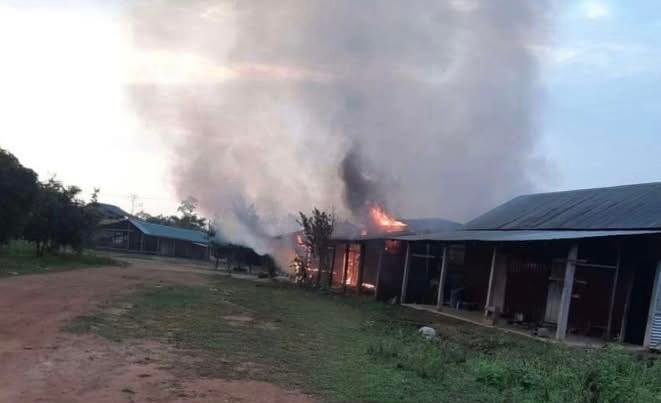
The council stated that women, children, and elderly villagers were forced to flee deep into jungles without food, medical assistance, or shelter after several houses were set ablaze. Calling the attacks a “brazen assault upon Indian sovereignty,” the UNC accused the Government of India and central security agencies of failing to protect indigenous Naga populations living along the sensitive border belt. The organisation questioned how “hundreds of foreign armed militants” could allegedly cross the international boundary and attack villages within less than 24 hours after central forces reportedly inspected the area on May 6. It termed the inaction of security forces “indefensible” and said the incident has severely damaged public trust in Central Forces deployed in the region. The UNC further alleged that around 300 Kuki refugees currently taking shelter at Namlee-Wanglee were being used as a cover for militant activities. It also claimed that some refugee children had been enrolled as cadres of PDF/KNA(B) and were involved in acts of arson during the attacks — a claim that could not be independently verified. In another serious allegation, the council accused state authorities and central security personnel, particularly Assam Rifles, of adopting a “biased and selective enforcement” approach. The statement alleged that bunkers and shelters belonging to Naga village guards were dismantled while Kuki militant bunkers remained untouched in nearby areas.
Describing the violence as “a calculated and coordinated attack against indigenous people,” the UNC accused both the Manipur government and central authorities of failing to act decisively despite repeated appeals from vulnerable Naga villages in foothill and border areas.
The organisation demanded:
Immediate and decisive military action against the alleged foreign aggressors,
Restoration of security along the International Indo-Myanmar Border,
Emergency relief for displaced civilians,
Deployment of trusted Manipur State Forces in affected areas,
And a high-level time-bound inquiry into how militants crossed the border undetected.
The UNC warned that if the Government of India and the Ministry of Home Affairs fail to guarantee the protection of Naga civilians and their ancestral lands, “the Naga people will take its own course to defend and safeguard the security and Naga ancestral land.” The fresh escalation has further intensified tensions in the already volatile hill districts of Manipur, where ethnic violence and armed confrontations continue to fuel fear and displacement among civilians living near the Indo-Myanmar border.







 Users Today : 164
 Total Users : 81829