



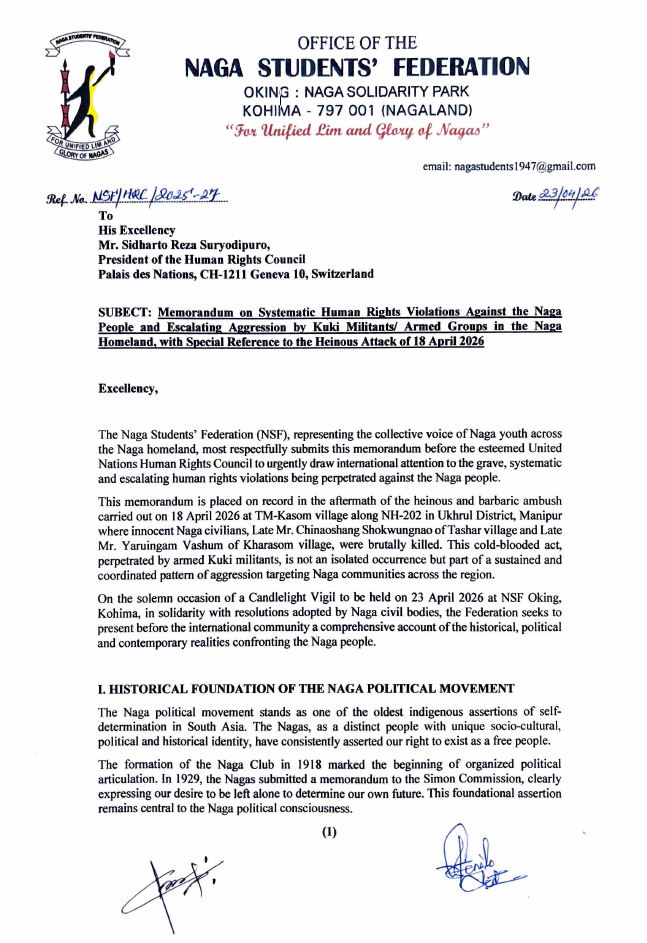
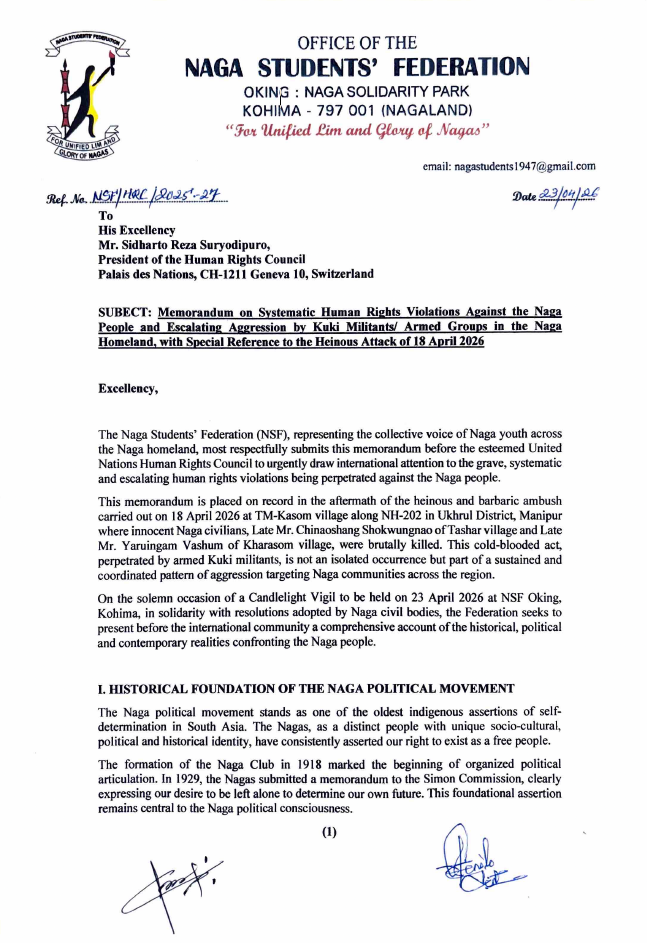
In a strongly worded memorandum addressed to the President of the United Nations Human Rights Council (UNHRC), the Naga Students’ Federation (NSF) has alleged widespread and escalating human rights violations against the Naga people, calling for urgent international intervention.
The memorandum, dated April 23, 2026, was submitted from Kohima and directed to the UNHRC leadership in Geneva. It highlights what the federation describes as a “grave and systematic pattern of aggression” carried out by armed groups, particularly in Naga-inhabited regions.
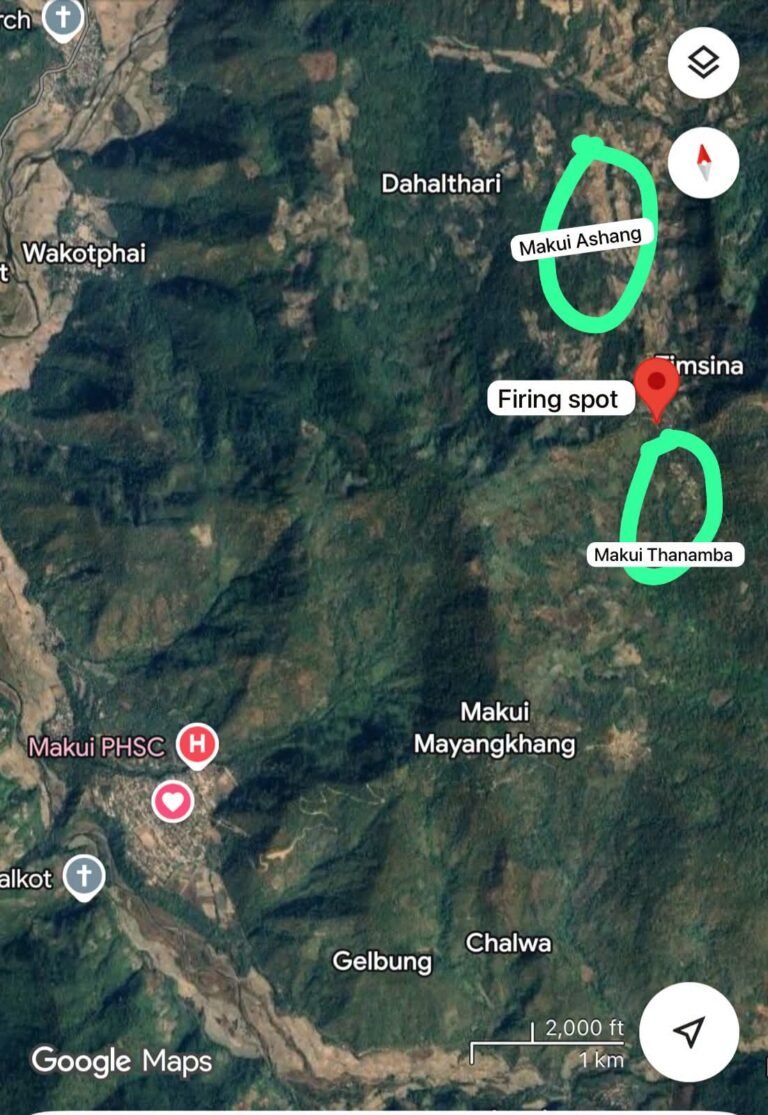
At the heart of the submission is a detailed account of a deadly ambush that took place on April 18, 2026, along the Imphal–Ukhrul road in Manipur. The attack, described as “heinous and barbaric,” reportedly resulted in the deaths of two civilians and has been cited as a stark example of the ongoing violence faced by Naga communities. According to the NSF, such incidents are not isolated, but rather part of a broader, coordinated pattern targeting Naga populations across the region.
The federation emphasized that the memorandum is not merely a reaction to a single incident but an appeal to recognize a sustained crisis. It argues that the violence has created an atmosphere of fear and insecurity, undermining basic human rights and threatening the social fabric of Naga society.
In a symbolic show of solidarity, the NSF organized a candlelight vigil in Kohima on the same day the memorandum was issued. The event aimed to honor victims of violence while drawing both national and international attention to the situation on the ground.
Beyond documenting recent incidents, the memorandum also places the current crisis within a historical and political context. It traces the roots of the Naga political movement back to the early 20th century, highlighting the formation of the Naga Club in 1918 as a key moment in the articulation of Naga identity and aspirations. The document reiterates the long-standing demand for self-determination, emphasizing that the Naga people have consistently asserted their right to define their own political future.
The NSF’s appeal to the international community underscores growing frustration among Naga youth and civil society organizations. By approaching the UNHRC, the federation is seeking to elevate the issue beyond domestic discourse and push for global scrutiny of the alleged violations.
The memorandum concludes with a call for immediate attention and action from international human rights bodies, warning that continued inaction could embolden further violence and deepen the humanitarian crisis in the region.
As tensions persist in parts of Northeast India, the NSF’s move signals a significant escalation in advocacy efforts, potentially drawing wider international focus to a conflict that has long remained underrepresented on the global stage.







 Users Today : 65
 Total Users : 81730