


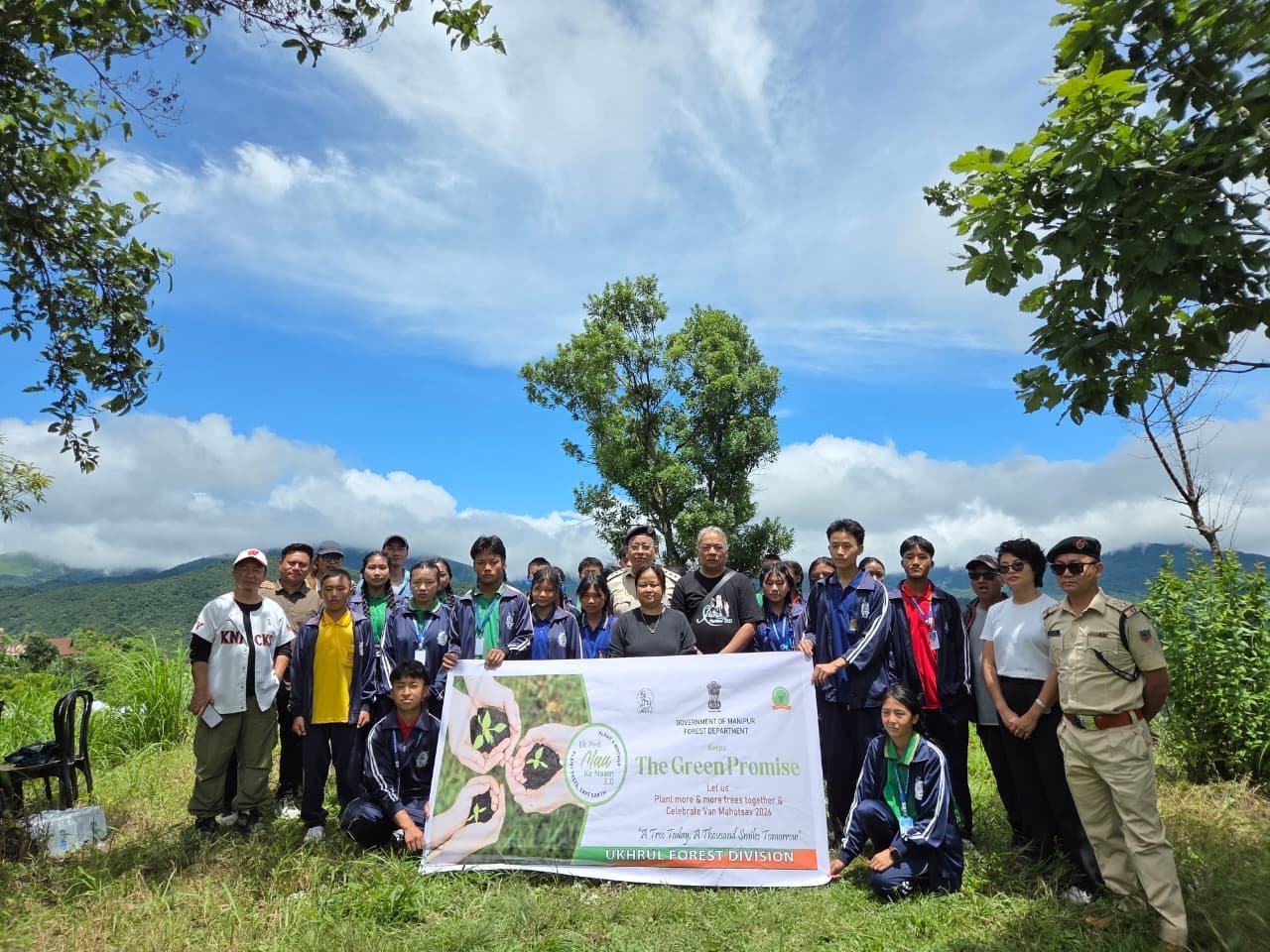
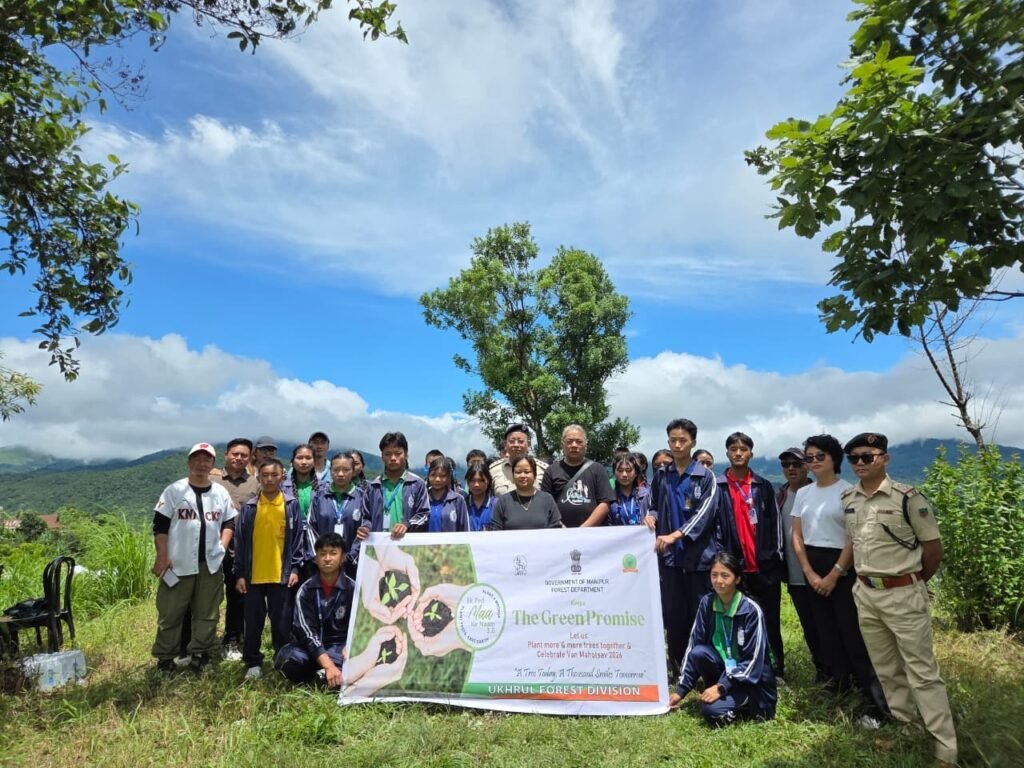
Ukhrul, July 4: A one-day awareness programme on wildlife protection and conservation was conducted by the Ukhrul Forest Division in collaboration with the Ukhrul District Working Journalist Association (UDWJA) under the theme, “Protect Wildlife, Preserve Nature, Secure Our Future.”
The programme was organised as part of Van Mahotsav, the annual tree plantation festival observed across the country to promote the importance of forests, trees, wildlife and ecological balance. The event brought together forest officials, journalists, students and members of the public with the objective of strengthening awareness on wildlife protection and encouraging collective responsibility towards nature.
Addressing the gathering, Divisional Forest Officer Laishram Gitla, IFS, made a strong appeal to the media fraternity to become active partners in conservation. Speaking particularly to the journalists present, she said it was an honour to address them during Van Mahotsav, a time when people across the country take part in planting saplings and renewing their commitment to the environment.
She observed that while thousands of citizens may be holding saplings in their hands during Van Mahotsav, journalists hold something equally powerful — the pen, the camera and the microphone. A sapling planted in the soil grows into a tree, she said, but a story planted in the minds of the public can grow into a movement.
Emphasising the role of the fourth estate, the DFO said the press is not merely an observer of environmental conservation but an essential force in keeping the movement alive. She described the media as the “life support system” of conservation, pointing out that public awareness, accountability and action are strengthened when environmental issues are reported with seriousness and sensitivity.
“Conservation cannot happen in the dark,” she said, adding that the press plays a vital role in safeguarding the environment by bringing important ecological concerns before the public. Through news reports, features, documentaries, interviews and digital storytelling, journalists help ordinary citizens understand complex issues such as climate change, biodiversity loss, deforestation, wildlife crimes and the importance of festivals like Van Mahotsav.
She further stated that the media has the power to explain why the tree outside one’s window matters, why forests must be protected, and why wildlife conservation is directly connected to the future of human society. According to her, environmental protection should not be treated as the responsibility of the Forest Department alone, but as a shared duty involving every citizen, institution and community.
DFO Gitla also reminded the gathering that planting trees is important, but taking care of them after plantation is equally important. She said saplings planted during such programmes must be nurtured, protected and monitored so that they can grow into healthy trees and serve the purpose for which they were planted.
She urged journalists to continue giving voice to those who often remain unheard — grassroots environmental activists, forest guards working in difficult and risky conditions, and rural communities who are the true custodians of forests, wildlife and natural resources. These people, she said, are often the first line of defence in protecting wilderness and biodiversity.
Calling upon the media to make better use of digital platforms, she encouraged journalists and media organisations to make conservation stories more engaging, visual and urgent, especially for the younger generation. She said that in an age dominated by social media and fast-moving information, conservation messages must be communicated in a way that can capture attention and inspire action.
“Nature does not have a PR agency. It relies entirely on the integrity of the press to tell its stories,” she said, while thanking the media fraternity for their voice, courage and continued dedication to truth and the shared planet.
Speaking on the occasion, Chingai Range Officer Bikram Nongmaithem also stressed the need for every citizen to take responsibility for the protection of the environment, wildlife, flora and fauna. He said caring for nature is not only a moral duty but also a fundamental responsibility of the present generation.
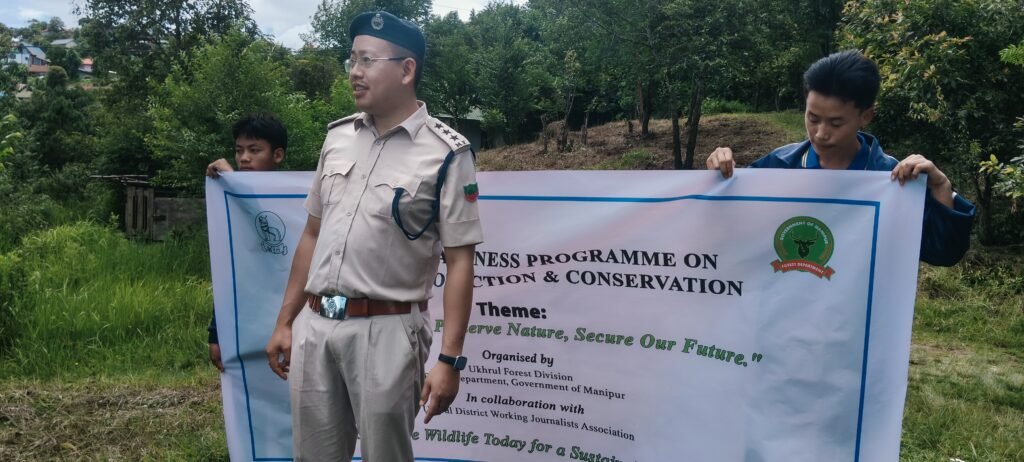
Referring to rare and precious species such as the Shirui Lily and the Nongying bird, he asked what answer the present generation would give to future generations if such species were allowed to disappear. He said the extinction of such natural treasures would be an irreversible loss not only for Ukhrul or Manipur but for humanity as a whole.
He further appealed to the public to refrain from hunting, buying or consuming wild animals. He said wildlife protection cannot be achieved through law enforcement alone unless people change their behaviour and understand the long-term consequences of destroying nature.
The Range Officer also highlighted the importance of community participation in conservation, stating that forests and wildlife can be effectively protected only when local people, students, civil society, media and government departments work together with a common purpose.
Students from Oriental Naga Academy also participated in the programme, adding youthful energy and significance to the awareness campaign. Their participation was seen as an important step in educating young minds about the need to protect wildlife and preserve nature for the future.
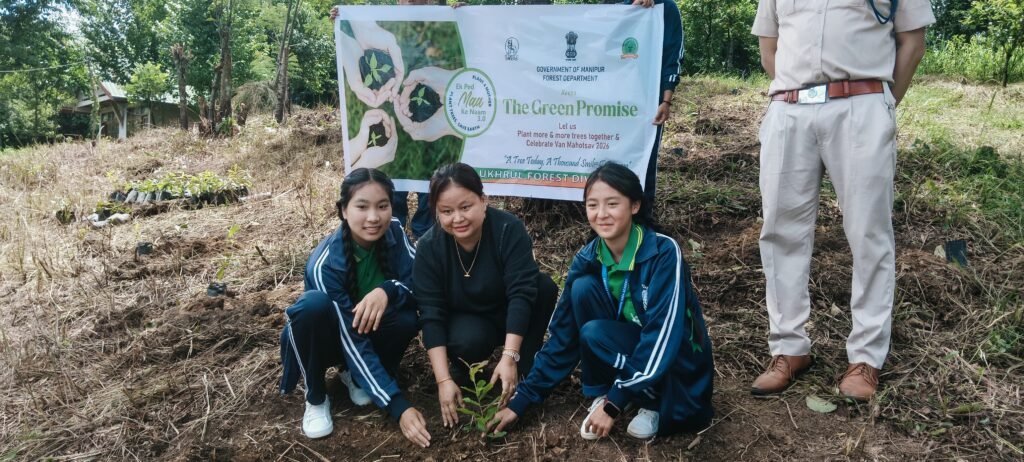
As part of the programme, around 200 saplings were planted at Charshung, Seipet Zingsho, Phungreitang in Ukhrul. The plantation drive was carried out with the message that every planted sapling must be cared for and protected until it grows into a tree.








 Users Today : 46
 Total Users : 66485