



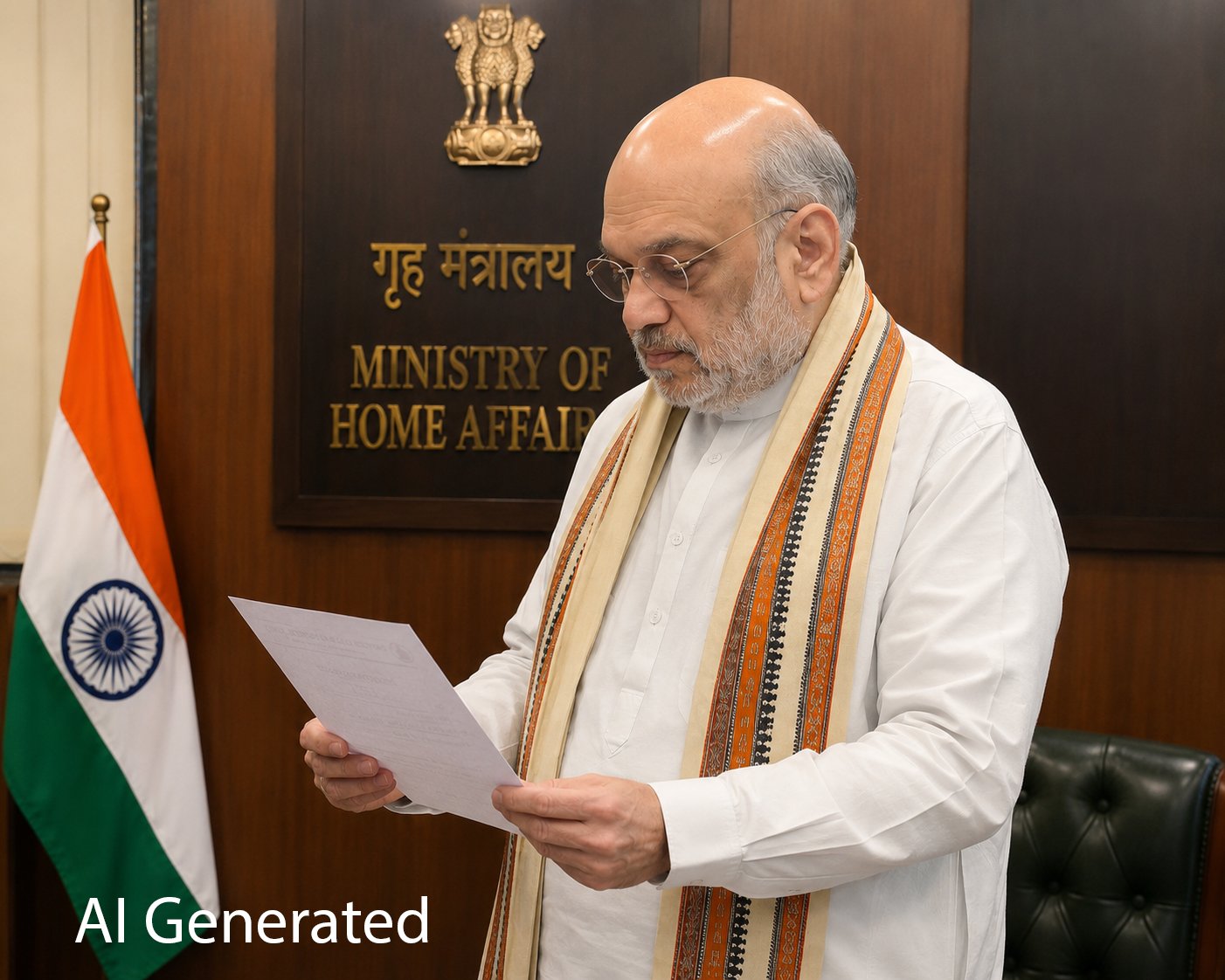
Tahamzam (Senapati District) — In a scathing 6-page memorandum dated July 22, 2026, the United Naga Council (UNC) has submitted a damning strategic security assessment to Union Home Minister Amit Shah, alleging systemic violations of India’s frontier governance framework and demanding immediate intervention from the Government of India.
The memorandum, addressed to the Home Ministry’s South Block office, documents a pattern of cross-border military incursions, documented abductions, communal violence, and alleged state complicity that the UNC argues undermines the legitimacy and integrity of India’s security architecture in its eastern frontier.
Core Allegations: A Cascade of Security Failures
The UNC’s assessment details three critical failures:
1. Cross-Border Military Incursion and Frontier Control Collapse
On May 7, 2026, approximately 100 heavily armed cadres of the Myanmar-based Kuki National Army-Burmas (KNA-B) crossed into sovereign Indian territory at the Naga villages of Z. Choru, Namlee-Wangley, and Kampong in Ukhrul district, Manipur. Using drone-mounted munitions and rocket launchers, the foreign force systematically razed Naga villages in a coordinated military operation—the first documented cross-border incursion of its scale in the region.
The UNC characterizes this as an uncontested violation of India’s border integrity, raising questions about:
- The efficacy of border security apparatus
- Alleged coordination with non-state actors on the Indian side
- Whether constitutional safeguards protecting national sovereignty are being upheld
2. Documented Abductions and Extra-Judicial Killings
Since January 2026, at least 30 documented incidents of arson, ambush, abduction, and armed assault have been directed against Naga villages and civilians across Kamjong, Ukhrul, Senapati, and Tamenglong districts.
Most gravely, on May 13, 2026, an estimated 18 Naga civilians, including two pastors, were allegedly abducted by the Kuki National Front-President (KNF-P) from Leilon Vaiphei village. Of these:
- 14 were released on May 15
- Six remains were discovered in mutilated condition—suggesting extra-judicial killing
The UNC states this pattern “indicates that the present security apparatus is neither capable nor credible in protecting innocent citizens from organized criminal enterprises.”
3. State Complicity and the Compromise of Justice Institutions
The council raises a constitutional crisis: Deputy Chief Minister Nemcha Kipgen, a key figure in Manipur’s security decision-making, stands accused of a conflict of interest due to her alleged marital relationship with Semtinthang (Thangboi) Kipgen, identified as President of the KNF-P—the organization allegedly responsible for the abductions and killings.
The UNC asserts this undermines:
- Public confidence in impartial administration of justice
- The legitimacy of law enforcement operations
- The constitutional mandate to protect all citizens equally
The Legal and Constitutional Framework: Why This Matters
The memorandum argues that these incidents reveal a systemic breakdown in:
Administrative Justice: Enforcement that “fails to distinguish between rival groups harboring personal grudges and those genuinely engaged in national defense.” Over time, this “degrades the credibility of frameworks itself.”
Institutional Integrity: The reliance of India’s frontier security on SoO (Suspension of Operations) frameworks—which the UNC argues have been weaponized to shield militant groups from prosecution—compromises the state’s ability to enforce rule of law.
Constitutional Legitimacy: The council argues that if India’s eastern frontier security rests on:
- Reckonings without evidence
- Frameworks with no accountability mechanism
- Institutional capture by interested parties
…then the foundations of legitimate security architecture face erosion.
The UNC’s Charter of Demands
The council has issued eight core demands to both the Government of Manipur and Government of India:
- Immediate judicial review of the Suspension of Operations (SoO) framework and its cross-border extension into Myanmar
- Arrest and prosecution of KNF-P cadres responsible for the May 13, 2026 abductions
- Removal of Deputy CM Nemcha Kipgen to restore public confidence
- Constitutional amendment establishing transparency and accountability in frontier security governance
- Reclassification of KNF-P as a terrorist organization under domestic and international law
- Strengthened formal engagement between the United Naga Council and Ministry-level institutions on border security design
- Institutional protections against political interference in security operations
- Recognition that legitimate frontier governance depends on constitutional engagement with historically rooted indigenous communities, not tactical convenience
The Larger Question: Legitimacy of Frontier Security
The UNC’s assessment culminates in a philosophical challenge to New Delhi:
“The question before the Government is therefore not simply how to respond to the latest incidents of violence. It is whether India’s eastern frontier will continue to depend principally upon recurring crises, management on an ad-hoc basis, or whether it will be strengthened through a durable architecture founded upon legitimacy, constitutional engagement, accountable institutions, and trusted partnerships with historically rooted indigenous communities.”
The council argues that durable frontier stability depends on legitimacy—not military presence alone. Without public confidence in impartial administration, institutional accountability, and transparent engagement, recurring crises become inevitable.
Timeline of Recent Escalations
- February 2026: Communal violence in Litan and K. Lungwiram over land disputes
- May 7, 2026: Cross-border KNA-B incursion into Ukhrul (100 armed cadres)
- May 13, 2026: Abduction of 18 Naga civilians; killing of Wilson Thanga Chiru
- May 15-17, 2026: 14 hostages released; 6 presumed dead; UNC imposes economic blockade
- June 10-12, 2026: Recovery of remains; 24-hour shutdown called across Naga areas
- July 22, 2026: UNC submits memorandum to Union Home Ministry
What Happens Next?
The Union Home Ministry has not yet issued a substantive response to the UNC’s allegations or demands.
Security analysts note that if the Government of India does not address the council’s concerns on institutional accountability and frontier governance architecture, the risk of sustained Naga-Kuki tensions—and potentially broader regional destabilization remains acute.
The UNC has signaled that it will escalate advocacy and community mobilization if demands are not met within a reasonable timeframe.









 Users Today : 173
 Total Users : 66417