

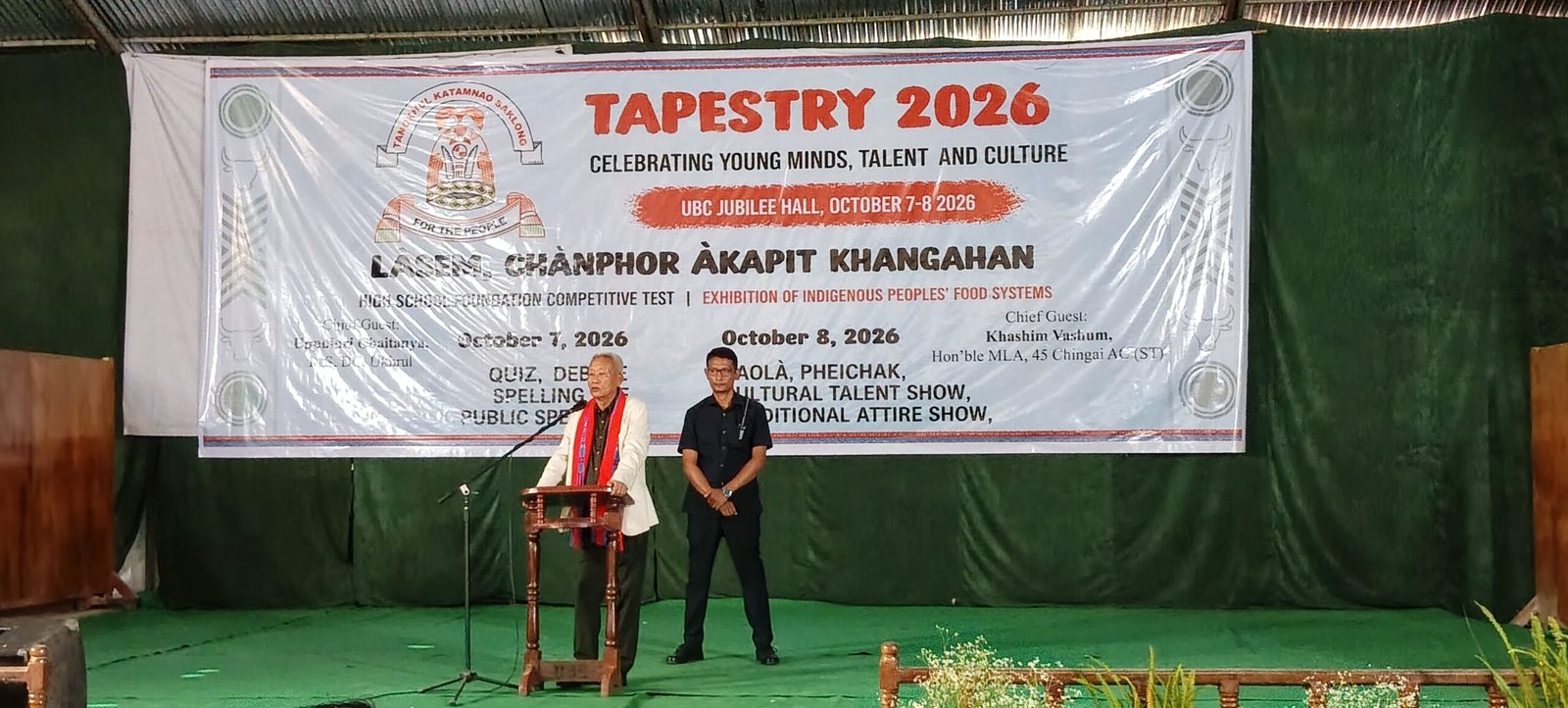
UKHRUL, October 8, 2026: The second day of Tapestry 2026, organised by the Tangkhul Katamnao Saklong (TKS), the apex student body of the Tangkhul Naga community, drew approximately 1,800 students from various schools at Jubilee Hall, Union Baptist Church (UBC), Ukhrul, on Thursday.
The programme brought together students, teachers and community leaders to celebrate Tangkhul culture, promote the preservation of the mother tongue and encourage students to develop their literary and cultural talents.
On the second day, students participated in various competitions and cultural activities, including Haola, Pheichak, Cultural Talent Show and Traditional Attire Show, providing them with opportunities to showcase their knowledge, creativity, cultural talents and traditional identity.
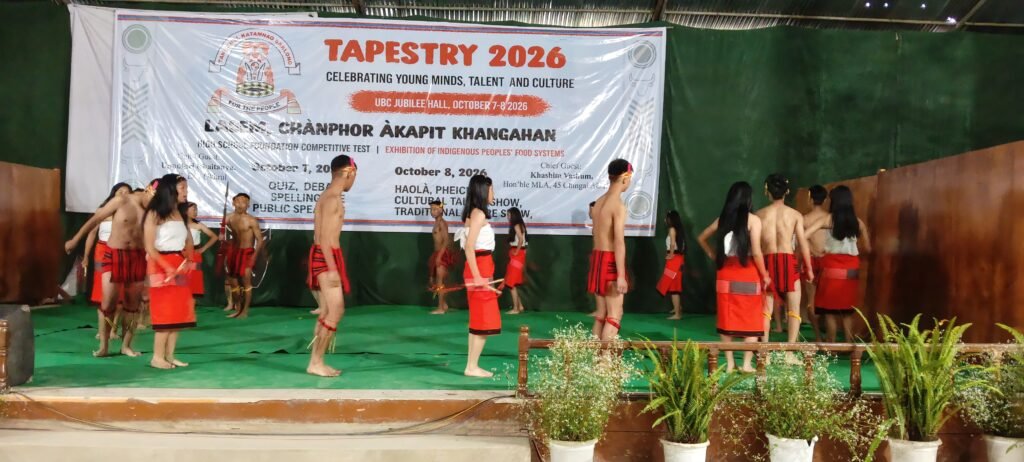
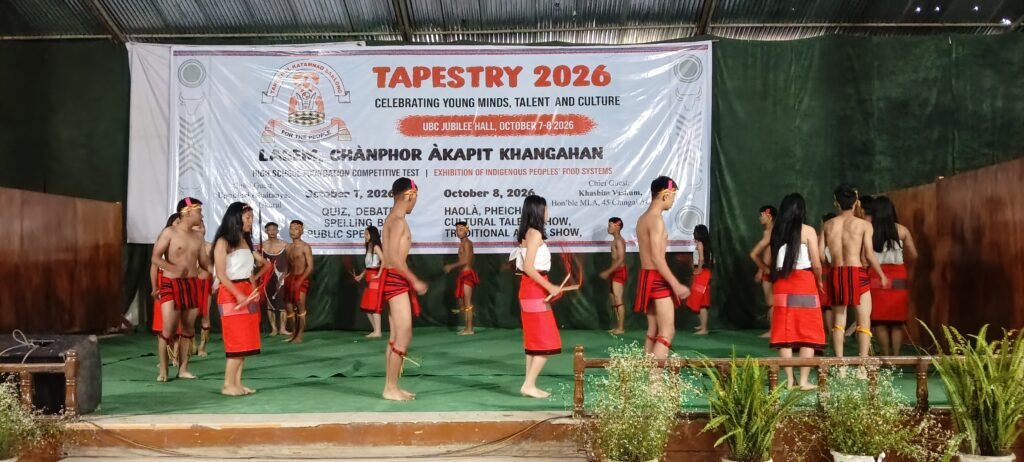
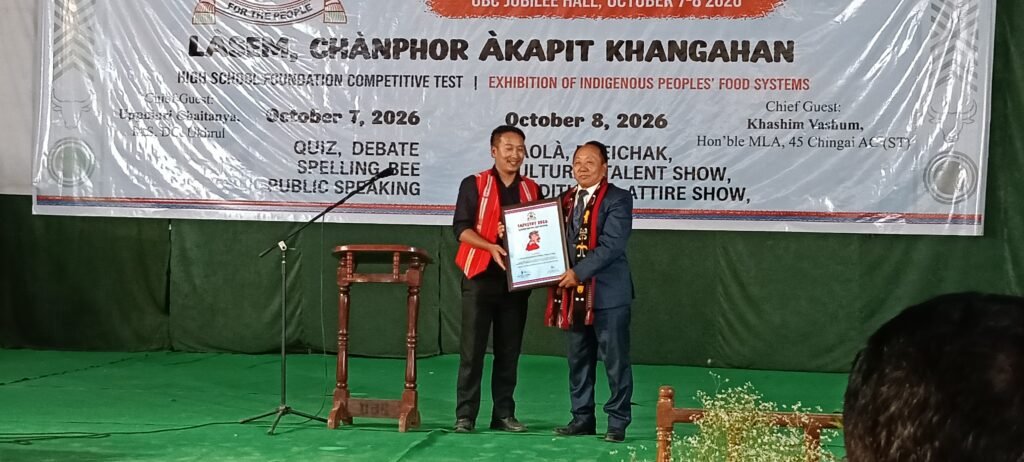
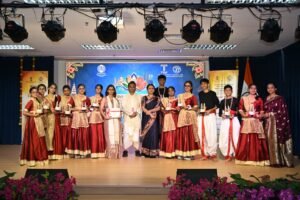
Nine schools presented traditional folk dances on the second day, following the participation of 11 schools on the opening day.
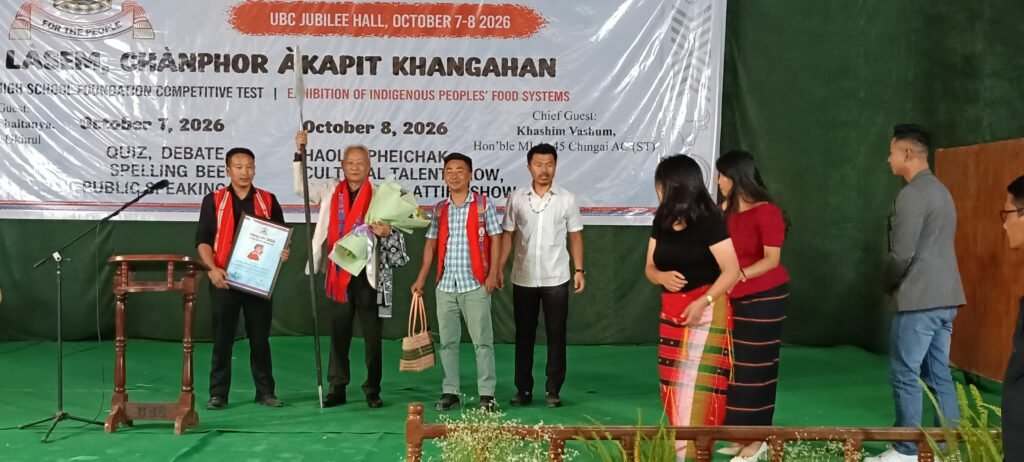
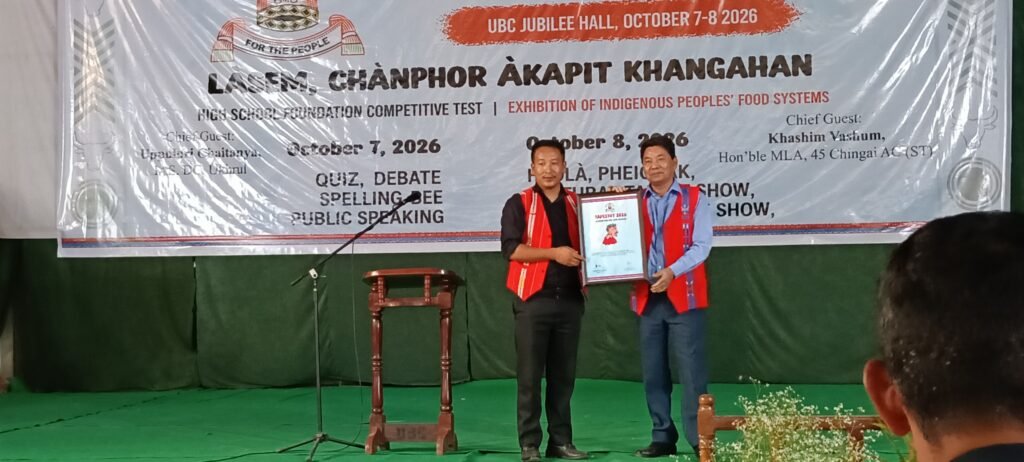
The programme was attended by Khashim Vashum, MLA of the 45-Chingai Assembly Constituency (ST), as the Chief Guest and Dr. Ringkahao Horam, Principal of Pettigrew College, who also addressed and encouraged the students.
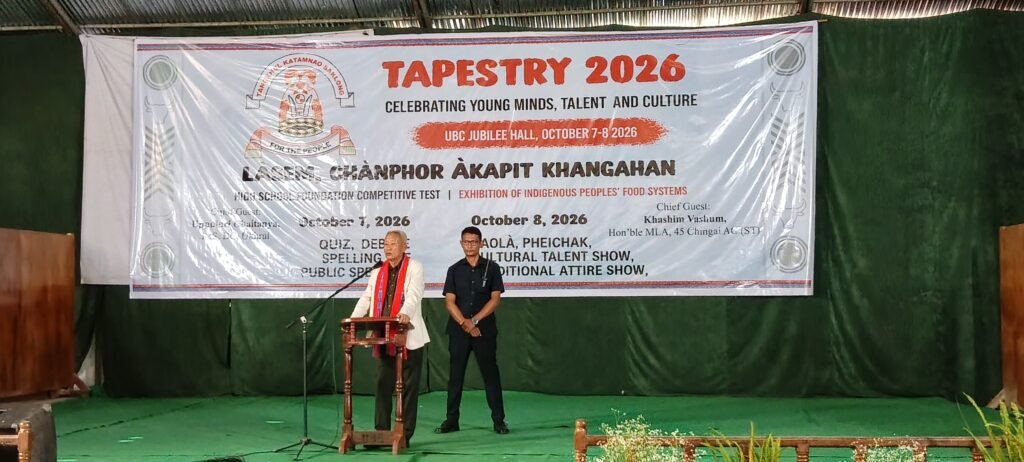
Addressing the gathering, Chief Guest Khashim Vashum emphasised the importance of education, discipline, cultural identity and faith in shaping the future of young people.
Recounting his experiences, the MLA spoke about Dr. Ringkahao Horam, Principal of Pettigrew College, and highlighted how dedication and perseverance could yield positive results. He urged the Tangkhul community to give greater attention to Pettigrew College, describing it as the only government college serving the Tangkhul community, and called for collective efforts to improve its academic standing and reputation.
Vashum also acknowledged the contributions of missionary institutions to education in the region. Referring to the legacy of William Pettigrew, he mentioned Alice School and recognised the role of Catholic missionary institutions in producing educated individuals and officers who have contributed to society.
Drawing from his own educational background, the MLA recalled studying in a government school at a time when secondary education facilities were comparatively weak. He urged TKS to invite village-level schools to competitions in the future, particularly government schools, so that students from remote areas could also participate and benefit from such initiatives.
He urged students to build good character during their school years, reminding them that their present actions would shape how they would be remembered in the future. He also emphasised the importance of discipline, dedication and responsibility, noting that students must recognise the sacrifices their parents make to support their education.
Recalling his student days in Delhi, Vashum shared how his parents would send him 500 rupees earned through their hard work. He said he sometimes deliberately kept the money hidden among his books so that finding it later would bring him a pleasant surprise. Through the anecdote, he reminded students to value their parents’ sacrifices and use the opportunities available to them wisely.
He encouraged students not to feel discouraged by limited financial support or difficulties in pursuing education outside Manipur. Sharing his own journey, he said he had never imagined during his school or college days that he would one day attend a programme as its Chief Guest, attributing his journey to God’s grace and the importance of hard work.
“God helps those who try hard,” he said, encouraging students to remain committed to their studies and trust in their efforts.
The MLA also stressed the importance of preserving the Tangkhul language, expressing concern over people who are unable to read, write or speak their mother tongue fluently. He urged the younger generation to take the learning of Tangkhul seriously, describing language as an essential part of their roots and identity.
He further expressed hope that the younger generation would live in harmony in the future, understand one another better and work towards reconciliation and lasting peace among each other.
The TKS president highlighted the importance of providing students with a platform to express themselves through writing and cultural activities. He pointed out that while the Mizo language was recognised by Manipur University in 1993, the Tangkhul language had yet to receive similar recognition.
He said Tapestry was designed to provide opportunities for students who otherwise lacked platforms to showcase their literary abilities. He added that the writings produced during the competition would be preserved for future publication, allowing the works of young writers to contribute to the development of Tangkhul literature.
The TKS president stressed that cultural preservation must remain a priority alongside modern education and development. He said the community should not forget its cultural identity in the pursuit of progress and clarified that Tapestry was not merely a competition but also a platform to nurture students’ talents and strengthen their connection with their language and heritage.
He also expressed gratitude to Timothy Zimik for extending assistance to displaced students during the ongoing situation. The TKS president further acknowledged the teachers for their interest, encouragement and support in motivating students to participate in the programme.
Tapestry 2026 continues to serve as a platform for students to showcase their cultural talents, strengthen their literary interests and deepen their appreciation of Tangkhul identity, language and heritage.







 Users Today : 115
 Total Users : 98323