
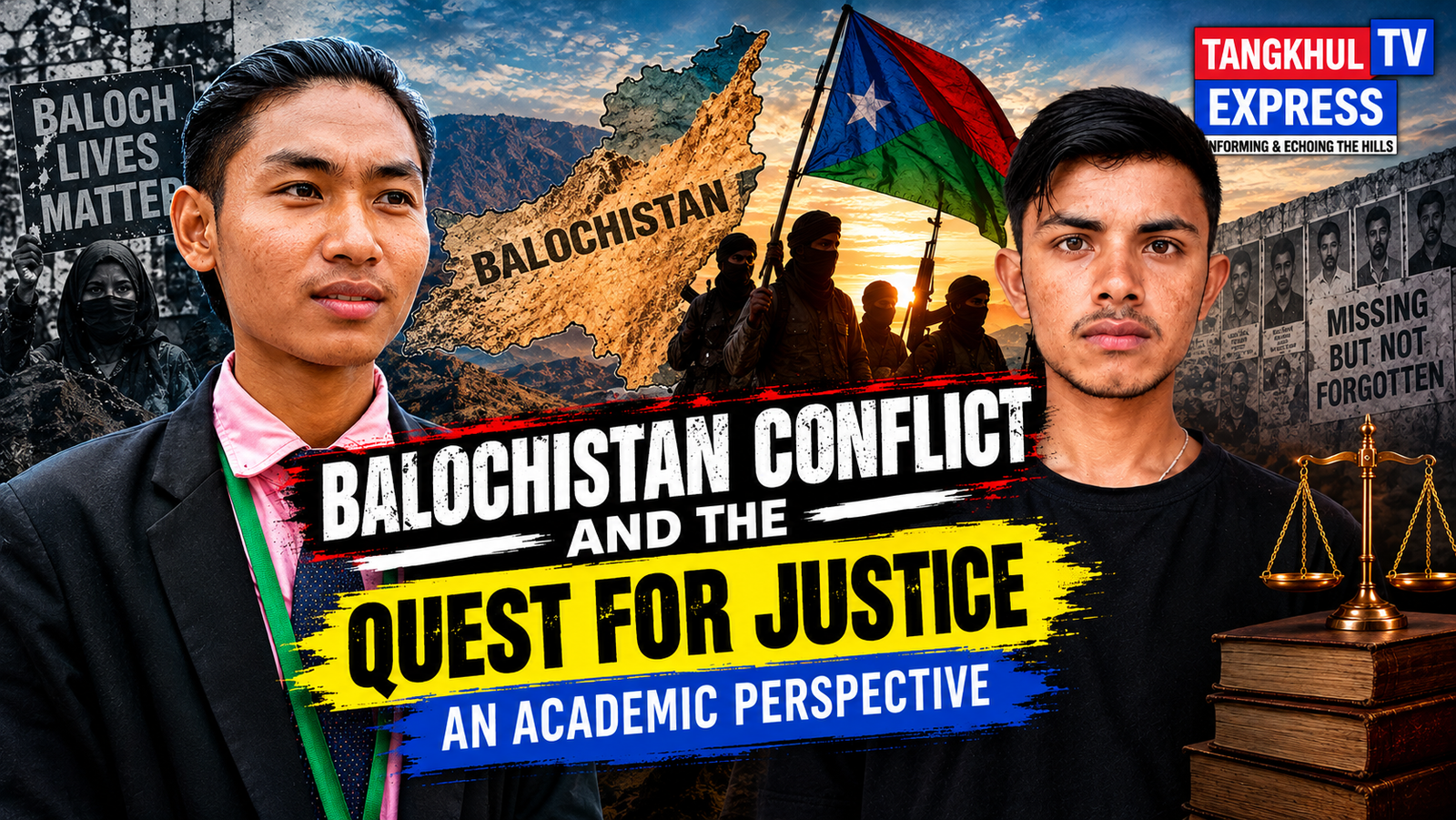
By Standhope Shimray & Milan Kuwar
BA Seventh Semester, Department of Political Science, St. Joseph College, Ukhrul
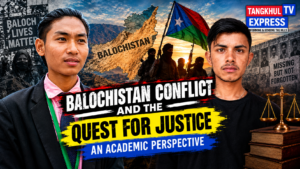
On 15 August 2016, Prime Minister Narendra Modi, speaking from the ramparts of the Red Fort, publicly acknowledged the people of Balochistan and thanked them for the goodwill they had expressed towards him. His reference marked an unprecedented public intervention by an Indian Prime Minister on Balochistan in an Independence Day address and gave the Baloch question significant international political attention.
The political map of the world has never been permanent. Kingdoms have disappeared, empires have collapsed, colonies have gained independence and new nations have emerged through extraordinary moments in history. Every sovereign state carries the legacy of political struggles, historical turning points and the aspirations of its people. Few contemporary cases illustrate this as starkly as Balochistan, a province where the Pakistani state’s own conduct has done much to keep the question of independence alive.
As seventh semester students of Political Science, we have already studied International Relations in the third semester and Human Rights in the fourth semester, along with other core subjects in our programme. In Human Rights, we studied the Universal Declaration of Human Rights (UDHR), the International Covenants on Human Rights, civil, political, economic, social and cultural rights, the protection of minorities, women’s rights, children’s rights and the role of the United Nations in promoting and protecting human rights. These courses also introduced us to important concepts such as sovereignty, constitutionalism and international law. They encouraged us to examine contemporary political conflicts from an academic perspective and to understand how historical grievances, state policies and human rights shape international politics. Our interest in the Balochistan issue has emerged from this academic background and from our effort to relate classroom learning to one of the most debated political questions in South Asia.
Balochistan covers nearly 44 per cent of Pakistan’s landmass and shares borders with Iran, Afghanistan and the Arabian Sea. It is rich in natural resources such as natural gas, coal, copper and gold, and it hosts Gwadar Port, an important part of the China Pakistan Economic Corridor. The province remains one of the least developed parts of Pakistan, with many communities facing serious problems relating to electricity, clean drinking water, healthcare, education and employment. Large development projects have also created concerns among sections of the local population about land, employment, resource control and the distribution of economic benefits. These issues have contributed to a strong feeling among many Baloch that the province’s natural wealth has not translated into adequate development for its own people.
Balochistan is also associated with serious allegations of human rights violations. Enforced disappearances have become one of the most important issues raised by Baloch activists and human rights organisations. Organisations such as the Baloch Yakjehti Committee, the Human Rights Council of Balochistan and Paank have documented cases of people who were allegedly taken into custody and later reported missing by their families. Their reports have also raised allegations of extrajudicial killings, arbitrary detention and mistreatment of detainees. Because the methodologies and figures reported by different organisations vary, the available numbers should be treated as documentation by those organisations rather than as independently established totals.
The issue has also received attention from United Nations human rights mechanisms. In February 2025, UN Special Procedures recorded information concerning alleged arbitrary arrests, mistreatment in detention, enforced disappearances and extrajudicial killings in Balochistan. The communication also referred to allegations of excessive use of force against peaceful protesters seeking information about forcibly disappeared persons, restrictions on activists and organisations, and censorship affecting media associated with Baloch rights activities. The UN document presents these matters as allegations received by the experts rather than as final judicial findings.
UN human rights mechanisms also raised concerns regarding members and leaders of the Baloch Yakjehti Committee. A May 2025 communication concerned alleged arrest, arbitrary detention, enforced disappearance and mistreatment of several BYC members, including Dr Mahrang Baloch, Beebow Baloch, Gulzadi Baloch, Sibghatullah Shahjee and Bebarg Baloch. The communication shows that the treatment of Baloch human rights defenders had become a matter of international human rights concern.
Dr Mahrang Baloch, a physician and human rights defender, has become one of the most recognisable faces of the Baloch protest movement. Her detention, along with the detention of other BYC members, has attracted international attention. UN Special Procedures recorded allegations concerning the detention and treatment of these activists. Reports concerning women human rights defenders have also raised questions about their safety and treatment while in custody.
Islamabad maintains that its security operations are directed against separatist militancy and armed groups operating in Balochistan. Armed insurgent organisations have carried out attacks against security personnel, government institutions and infrastructure projects. Human rights organisations continue to question the scale and nature of the state’s response. They argue that civilians with no proven links to militant organisations have also been affected by security operations. Reports from districts such as Nushki, Kech and Turbat have included allegations of civilian deaths, enforced disappearances and unlawful killings. Local rights groups have also alleged the existence of so called death squads operating with state support, although these allegations are rejected by the Pakistani authorities. The continuing disagreement between official accounts and human rights documentation has made Balochistan one of the most controversial conflict zones in South Asia.
The constitutional dimension of the issue is equally significant. Pakistan’s Constitution guarantees the right to life and liberty, protection from arbitrary arrest, freedom of expression and assembly, and the right to a fair trial. Human rights organisations argue that these constitutional protections are frequently undermined in Balochistan. Peaceful demonstrations have faced arrests and restrictions, while journalists and activists have reported difficulties in documenting events in the province. The UN Human Rights Committee has also expressed concern about restrictions on the freedom of movement of dissenting persons, journalists, activists, members of ethnic minorities and human rights defenders in Pakistan, including specific references to Baloch activists.
The China-Pakistan Economic Corridor has become another important dimension of the Balochistan issue. Gwadar Port is considered one of the strategically significant projects under CPEC and is viewed by Pakistan as a major driver of economic development and regional connectivity. Many Baloch communities, however, believe that these projects have brought limited benefits to the local population. Concerns relating to land acquisition, increased security measures, employment opportunities and local participation have contributed to resentment in several parts of the province. These concerns continue to influence public opinion regarding large development projects in Balochistan.
The issue of natural resources has also become closely connected with human rights concerns. UN Special Procedures have received information concerning alleged human rights violations related to mining operations in Balochistan, including allegations of arbitrary arrest and detention, enforced disappearance and degrading treatment of human rights defenders who raised concerns about mining activities and environmental issues. These communications demonstrate how questions of resource development, local participation and human rights have become interconnected in the province.
Long standing political conflicts cannot be resolved through force alone. Allegations of enforced disappearances, unlawful killings, arbitrary detention and restrictions on civil liberties continue to deepen mistrust between the state and the Baloch population. Every family searching for a missing relative, every allegation of mistreatment and every unanswered demand for justice adds another layer to an already complex conflict.
Whether Balochistan ultimately remains an integral part of Pakistan or follows a different political path will depend largely on the choices made by political leaders, state institutions and the people of the region themselves. Lasting peace requires meaningful political dialogue, respect for constitutional rights, accountability, inclusive development and the protection of human dignity, principles that the Pakistani state has repeatedly failed to uphold in Balochistan. These are not excessive demands but the essential foundations for addressing one of South Asia’s longest running political conflicts and creating a just and dignified future for the Baloch people.






 Users Today : 169
 Total Users : 82330