



Ukhrul, July 23: The endangered dhole (Cuon alpinus), also known as the Asiatic wild dog, has been captured on a camera trap for the first time in the forests of Shirui Village, marking a significant milestone for wildlife conservation in Manipur and reaffirming the ecological importance of the village’s community-protected forests.
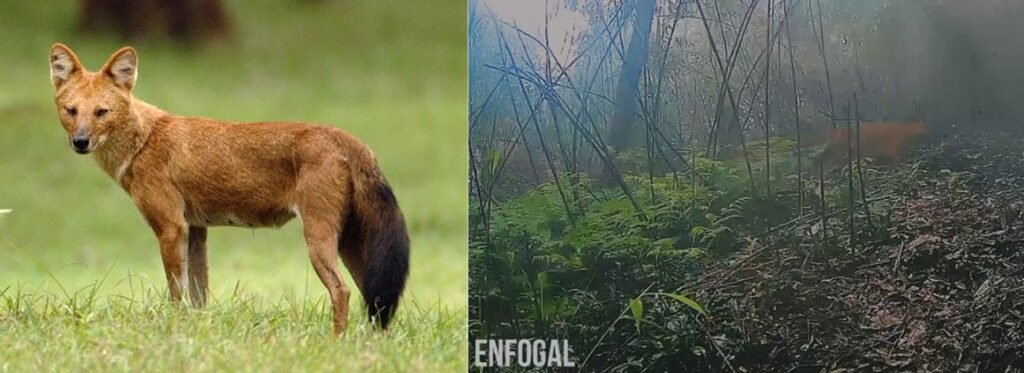
The rare record was made during a wildlife monitoring survey conducted by the Environmental Force at Grassroot Level (ENFOGAL), which has been documenting the biodiversity of Shirui Village while promoting community-led conservation initiatives.
According to ENFOGAL, the camera trap confirmation challenges a long-held belief among many local residents that dholes no longer inhabited the hills surrounding Shirui. The finding adds another significant species to the village’s growing list of wildlife records and underscores the conservation value of its forests.
The survey was carried out with the active support of the local community, particularly Pamreithing, a former hunter who has since become a committed conservationist. His knowledge of wildlife movements and forest terrain helped identify the location where the camera trap eventually recorded the elusive carnivore.
ENFOGAL has spent the past eight years conducting wildlife conservation awareness programmes across Ukhrul district, engaging schools, village authorities, youth organisations and local communities to promote the protection of wildlife and forest ecosystems.
The dhole is listed as Endangered on the International Union for Conservation of Nature (IUCN) Red List and is regarded as one of Asia’s most threatened social carnivores. The species depends on healthy forests, adequate prey populations and minimal human disturbance to survive. Conservationists say its presence indicates that Shirui’s forests continue to provide a suitable habitat for the species.
Researchers believe the discovery further strengthens Shirui’s status as one of Manipur’s most important biodiversity landscapes. In recent years, the area has yielded several notable wildlife records, suggesting its forests continue to harbour species that remain poorly documented by scientific studies.
The discovery is also expected to strengthen public awareness of wildlife conservation by highlighting the importance of protecting habitats that support endangered species.
Conservation efforts in the area have been reinforced through the Ukhrul Forest Division’s awareness programmes and the Community-Based Sustainable Forest Management (COSFOM) project, supported by KfW. Under the Forest Area Closure (FAC) initiative in Shirui Village, a community forest patrol regularly monitors protected forests to prevent illegal hunting, trapping and other destructive activities.
Speaking on the achievement, ENFOGAL Co-founder Patrick Shangh, a resident of Shirui Village, credited the success to the collective commitment of the community.
“This discovery reflects the richness of our forests and the dedication of our people to protecting them. The credit belongs to the Shirui Village Authority and the people of Shirui for their decision to ban hunting and support wildlife conservation. Their collective efforts have ensured that our forests remain a safe haven for wildlife. I hope this encourages more people to value and protect our natural heritage for future generations,” he said.
Conservationists say the first documented camera trap record of the endangered dhole is another testament to the success of community-led conservation in Shirui. They believe continued research and monitoring could reveal many more rare and threatened species, further establishing the village as one of Northeast India’s most significant community-conserved landscapes.






 Users Today : 43
 Total Users : 98625