


By : Vils Ningshen
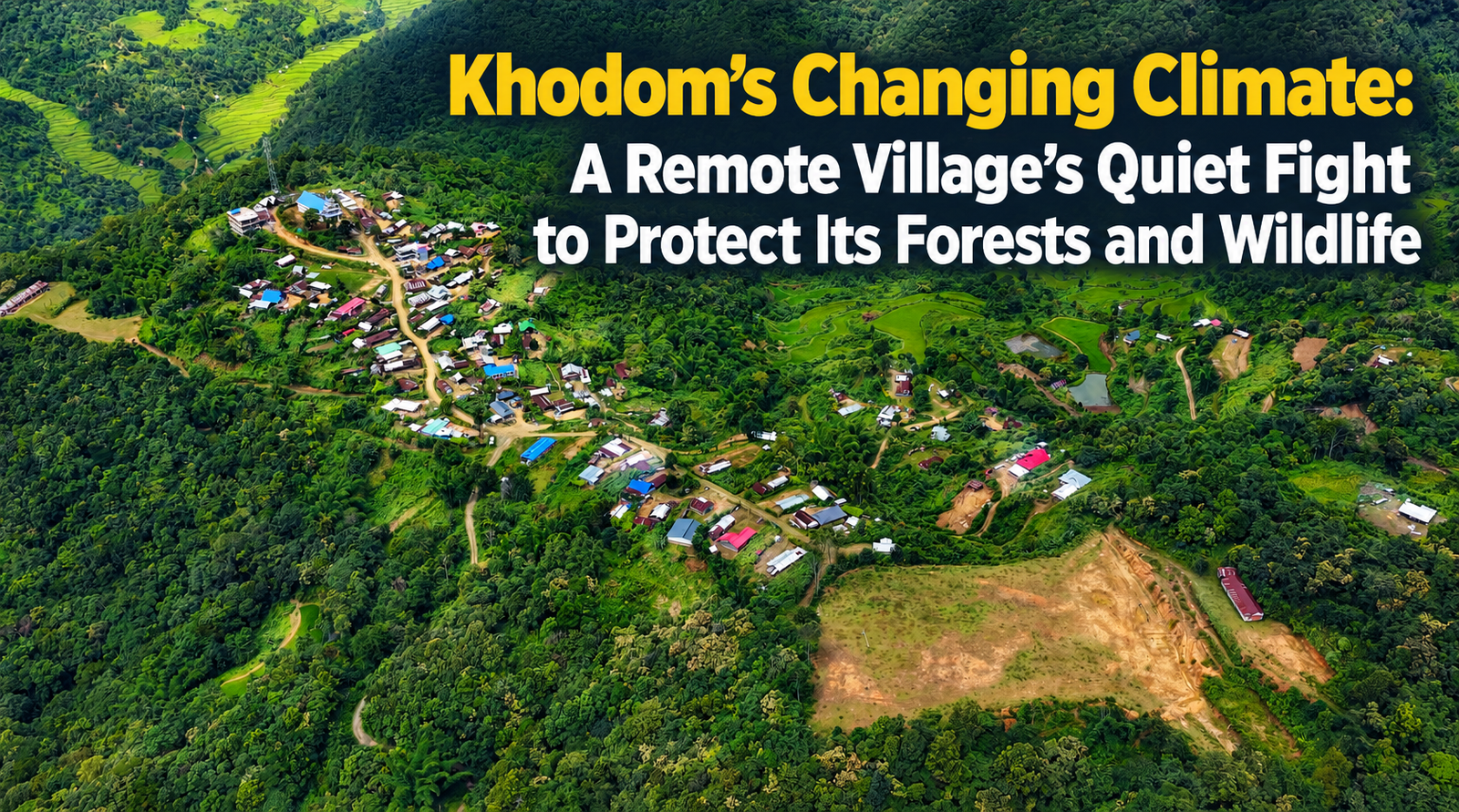
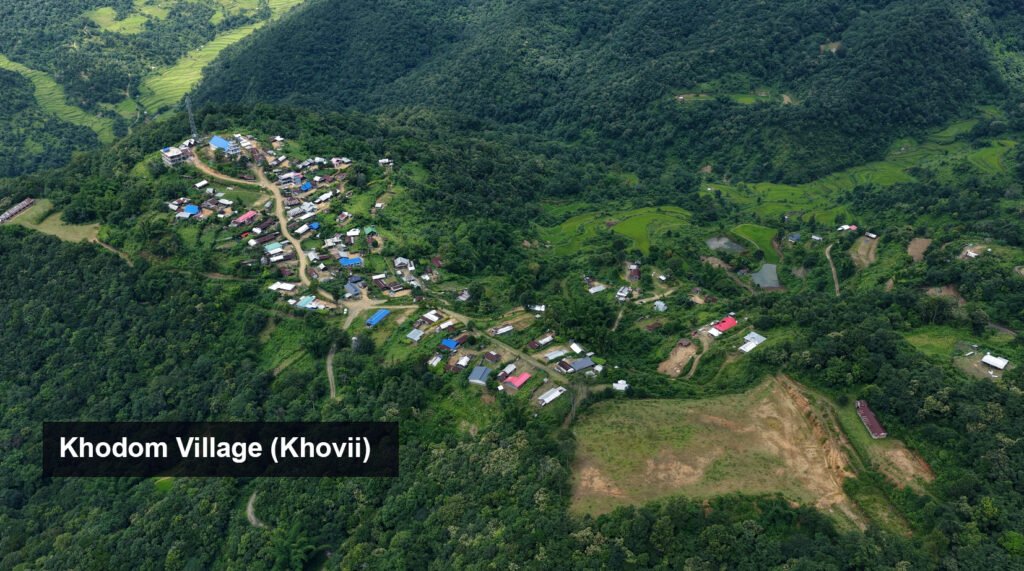
KHODOM, Senapati District: In the remote hills near Phaibung Sub-Division of Senapati district, the village of Khodom, also known as Khovii, is witnessing environmental changes that residents say are increasingly difficult to ignore.
For a community that has lived closely with forests, fields and wildlife for generations, these changes are experienced in everyday life in the crops grown in their fields, the insects appearing in greater numbers, changing weather patterns and wildlife turning up in places where it was rarely seen before.
Khodom was settled at its present location in 1977. According to villagers, the environment was markedly different then. Weather patterns were more predictable, forests were richer and farming conditions were considered more favourable.
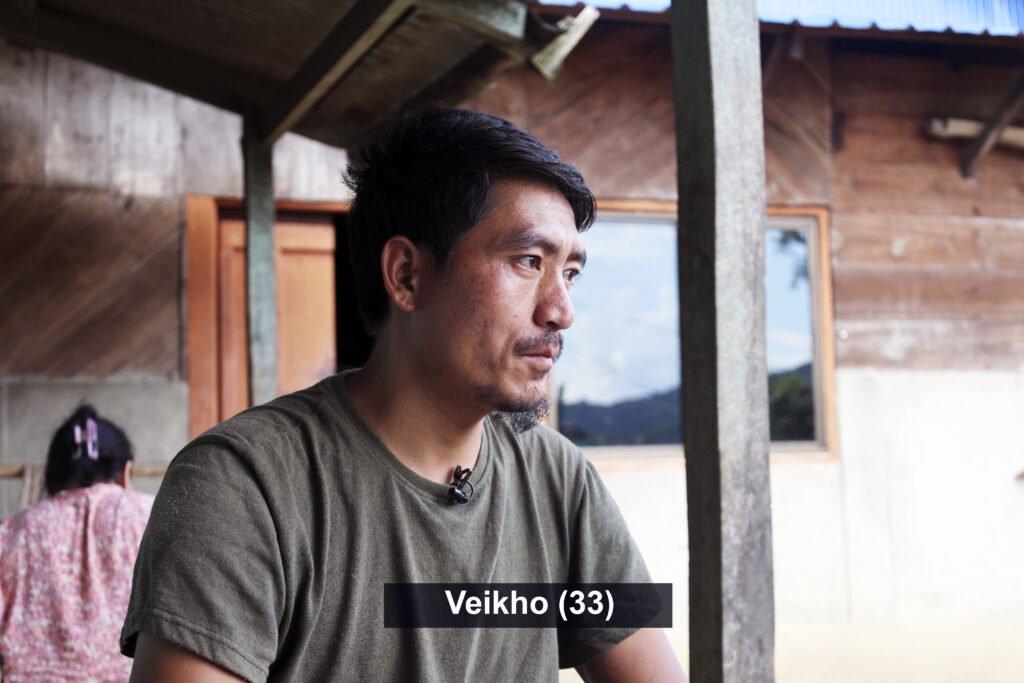
Veikho, 33, the village secretary of Khodom (Khovii), said the difference is now visible in agriculture.
“When the village was settled here in 1977, the weather was very good. But now the climate has changed a bit,” he said. “Our fields and gardens are not like they were before. Fertility is decreasing, while pests and weeds are increasing.”
The village has also changed its agricultural practices. While jhum cultivation was once practised, residents gradually moved away from it and now practise terrace farming, partly as an effort to conserve the environment and make better use of the land.
According to Veikho, villagers are also encountering insects they had never seen in earlier years, some of which are affecting crops and making cultivation more difficult.
Wildlife patterns have changed as well.
“There was not a single snake in our village before, but now we see so many snakes,” Veikho said, adding that villagers have particularly noticed an increase in sightings of king cobras.
“Maybe time is changing. The climate is changing, so the insects are also changing,” he said.
But Khodom’s story is not only about what the community is losing. It is also about how villagers are responding.
Hunting, once part of village life, has largely disappeared. Veikho said the community consciously moved towards protecting forests and wildlife, with the initiative coming from the village authority.
“Before, we used to hunt. Now there is no hunting. We have started preserving our environment as well as wildlife,” he said.
The conservation initiative has continued for around a decade and has gradually developed into stricter protection of wildlife within the village area.
“It has been 10 years that we have been preserving our wildlife,” Veikho said. “Now we have started taking strict action. Not even a single bird is allowed to be killed.”
For older residents, the transformation is particularly striking.
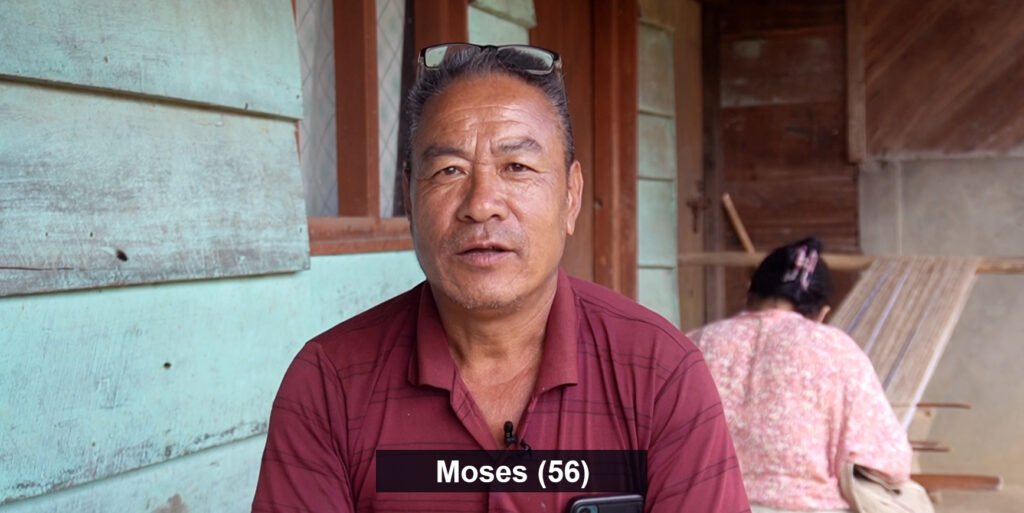
Moses, 56, an elder of Khodom, remembers the agricultural practices of the 1980s, when jhum cultivation was still common. Villagers cultivated crops including potatoes and yam during that period.
“During the 1980s, in our Khodom village, we used to practise jhum cultivation. At that time, we cultivated potatoes and yam,” Moses recalled. “But later the village stopped it to conserve the environment.”
The community subsequently shifted towards terrace farming, reflecting its effort to reduce pressure on the surrounding land.
Moses also remembers a time when rice cultivation was less troubled by pests.
“The rice plants were very good before, but now we see so many new pests in our fields,” he said.
Some insects are unfamiliar to the villagers. He described pests that camouflage themselves among leaves, feeding on young shoots until the stems eventually die.
One particular pest, locally known as “Otto”, has become a concern during the sprouting stage of rice. According to Moses, it damages young rice plants and affects their growth.
Another noticeable change has been the appearance and increasing number of leeches.
“It has been about five years that we have been seeing leeches in every field, and they are found in large numbers,” Moses said. “Before, we did not see leeches in and around the fields.”
They are now also being found in household gardens.
Changes in temperature are another part of the villagers’ memories. Moses said the climate once felt more comfortable throughout the year, while today both summer heat and winter cold seem more intense.
“Before, during winter, we did not use to wear jackets. But now, when winter comes, we cannot go outside without wearing one,” he said.
For Moses, the loss of trees may be one reason behind the changing conditions.
“I think the change is because we have cut down the trees,” he said.
While the villagers may not describe these changes in scientific terms, their observations come from decades of living and working within the same landscape.
Khodom remains one of the more remote settlements in Senapati district. Vehicles rarely reach the village, and its isolation has helped preserve aspects of traditional community life. Yet its remoteness has not shielded it from environmental pressures.
The village authority has also taken steps to regulate what enters the community. One example is its strict monitoring of broiler chicken brought into the village. Instead, villagers largely rear local chickens themselves, maintaining a locally adapted practice of raising livestock.
Another practice closely connected to the surrounding landscape is the traditional use of nettle.
After the “Laonii” festival, villagers harvest nettle and use its natural fibre to make shawls. The practice reflects an eco-friendly way of using locally available resources while preserving traditional knowledge passed down through generations. The continued use of a naturally growing plant keeps alive an important part of the community’s traditional relationship with its environment.
Khodom’s story, therefore, is not simply one of environmental decline. It is also a story of adaptation and community-led conservation.
The decision to stop hunting, the strict protection of birds and wildlife, the transition from jhum cultivation to terrace farming and the continued use of locally available natural resources all reflect a community attempting to protect its surroundings through collective action.
Khodom’s experience also shows why local observations matter. Environmental change is often discussed through global temperatures, scientific data and satellite images, but its consequences are ultimately experienced through everyday life.
A farmer notices when rice no longer grows as it once did. An elder remembers a different winter. A villager notices an unfamiliar insect or animal. These small observations, accumulated over decades, form a powerful record of a changing landscape.
And amid that change, Khodom has chosen conservation.
In a remote corner of Senapati, where roads are scarce and vehicles rarely pass, environmental protection is not an abstract idea. It is a community decision to stop hunting, protect wildlife, change farming practices and make more careful use of the resources around them.
The village may be facing an uncertain environmental future, but its response offers a quiet message of hope: protecting nature does not always begin with a large programme or outside intervention. Sometimes, it begins with a community deciding that the forest, wildlife and land are worth protecting because their own future depends on them.
This Article is produced under the joint initiative of Media Research Centre (MRC), Directorate of Environment & Climate Change (DE&CC) and Ukhrul District Working Jiurnalists’ Association (UDWJA)









 Users Today : 60
 Total Users : 98410