

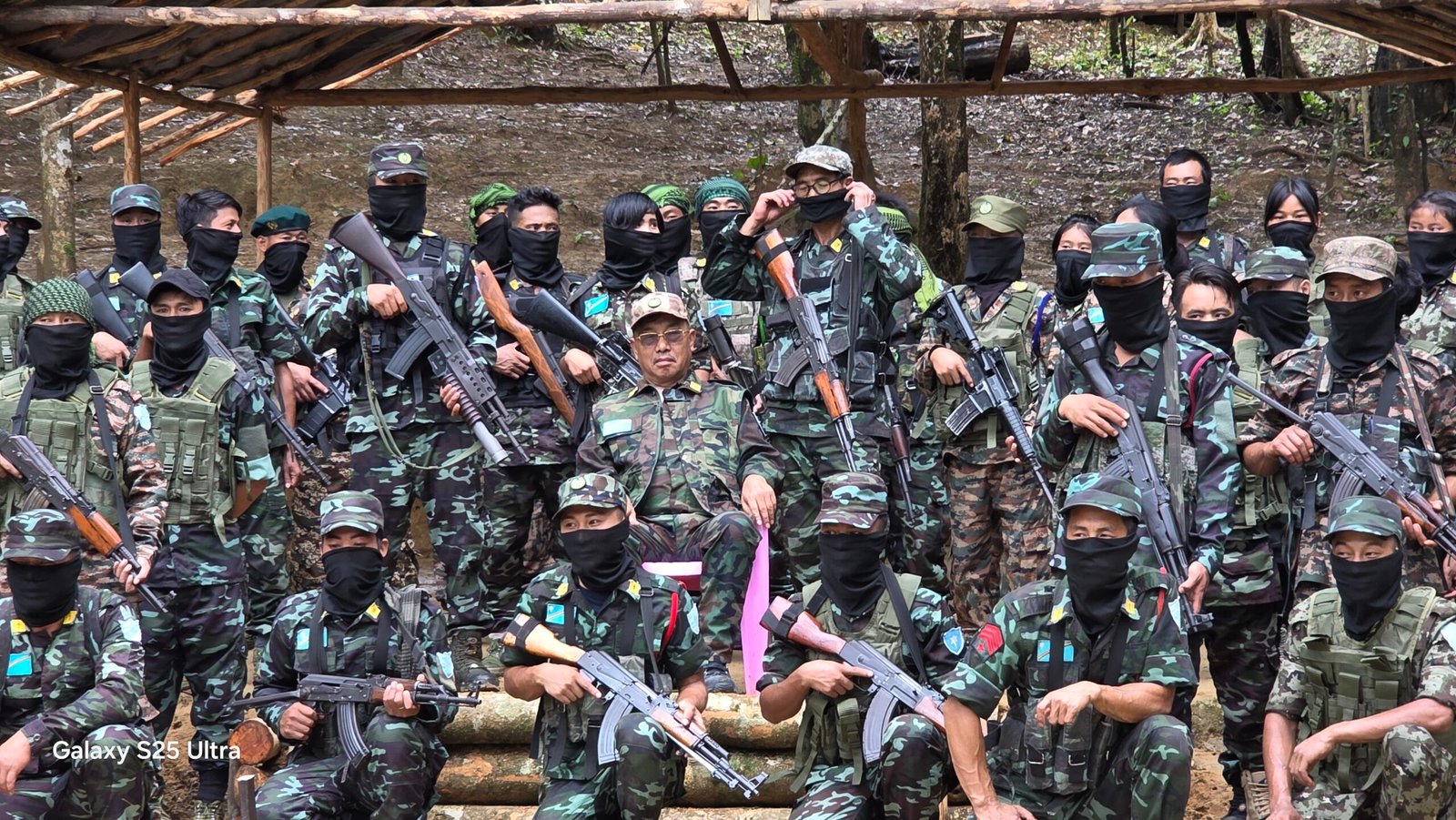
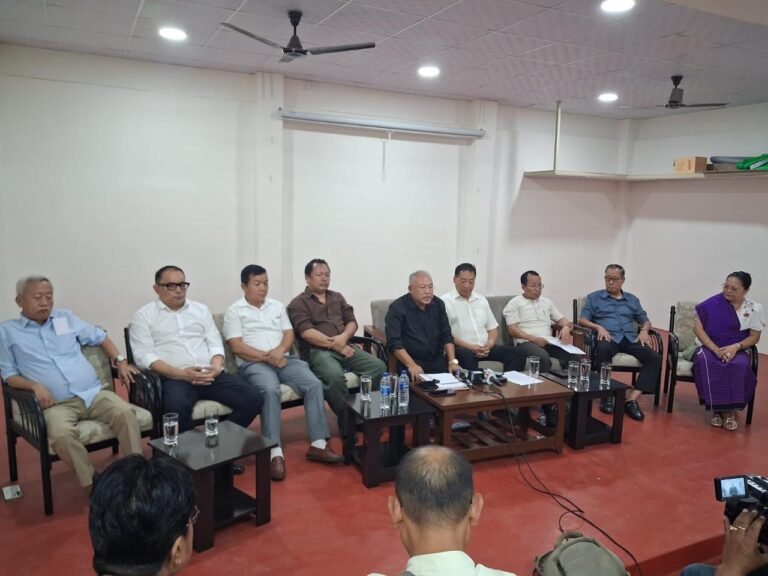
Mt. Horeb Camp, Aug. 1: Newly appointed Longvibu, Commander-in-Chief of the Naga Army – Eastern Flank, Lieut. Gen. A. Raman, on Wednesday formally assumed leadership of the Naga Army during a felicitation programme held at Mt. Horeb Camp, where he reaffirmed his commitment to the Naga political cause, declared that the spirit of the ceasefire agreement had ceased to exist, and called on Naga revolutionaries to continue resisting what he described as India’s suppression of Naga rights.
In his maiden address after taking over as Longvibu, A. Raman said he accepted the responsibility with “honour and humility” after serving the Naga national movement for 45 years. He paid tribute to fallen Naga leaders and soldiers, attributing the survival of the Naga nation to God’s grace despite decades of conflict, internal divisions and betrayal.
Reflecting on the history of the Naga movement, he said the nation had repeatedly suffered whenever it departed from righteousness and God’s will, leading to division and fratricidal conflict. He urged Nagas to repent and recommit themselves to what he described as the divine purpose in order to safeguard the nation’s future.
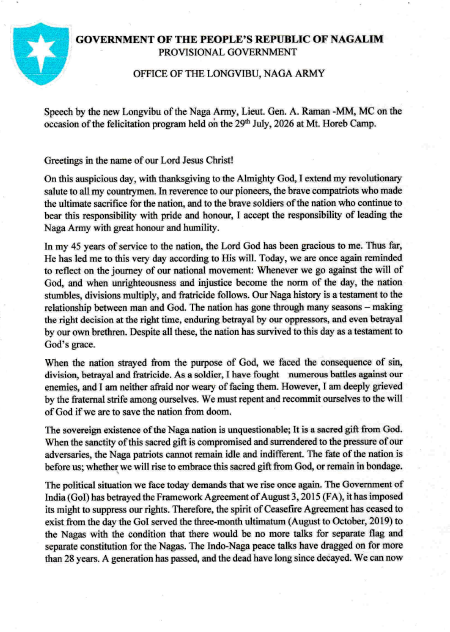
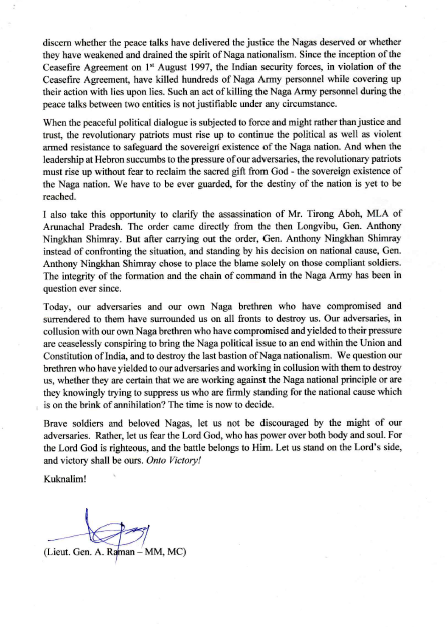
Addressing the political situation, the new Longvibu alleged that the Government of India had betrayed the Framework Agreement signed on August 3, 2015, and claimed that the spirit of the Ceasefire Agreement effectively ended after the Centre’s 2019 ultimatum rejecting separate Naga flag and constitution. He argued that the prolonged Indo-Naga peace talks spanning more than 28 years had failed to deliver justice and instead weakened Naga nationalism.
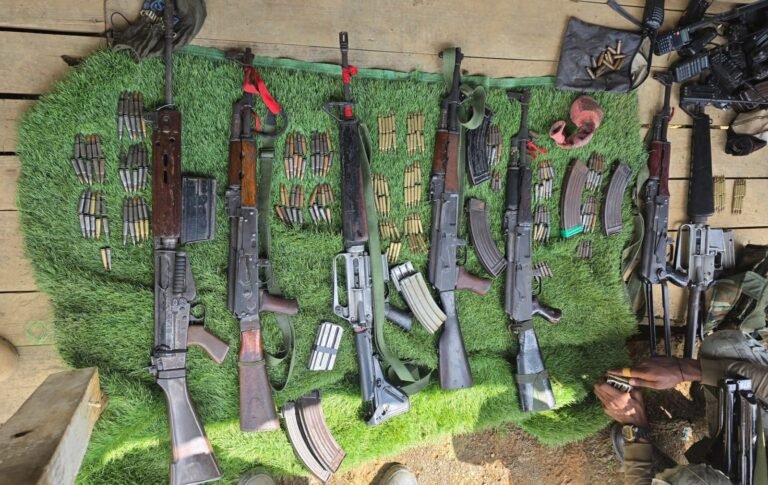
He further alleged that Indian security forces had killed hundreds of Naga Army personnel despite the ceasefire agreement, describing such actions as unjustifiable. Raman maintained that when peaceful political dialogue is replaced by force, revolutionary groups must continue both political engagement and armed resistance to protect what he termed the sovereign existence of the Naga nation.
In one of the most notable portions of his speech, Raman addressed the assassination of Arunachal Pradesh MLA Tirong Aboh. He claimed that the order for the killing had come directly from the then Longvibu, Gen. Anthony Ningkhan Shimray, alleging that responsibility was later shifted onto subordinate soldiers instead of being owned by the leadership. He said the incident had raised questions over the integrity of the Naga Army’s chain of command.
Raman also accused unnamed Naga groups of compromising with India’s position and attempting to bring the Naga political issue within the framework of the Indian Constitution. He urged Naga revolutionaries to remain steadfast, asserting that the struggle had reached a critical stage. Concluding his address, he called upon Naga soldiers and the people not to fear their adversaries but to place their faith in God, declaring that “the battle belongs to Him” before ending with the slogan “Kuknalim.”





 Users Today : 112
 Total Users : 79785