



By Vils Ningshen
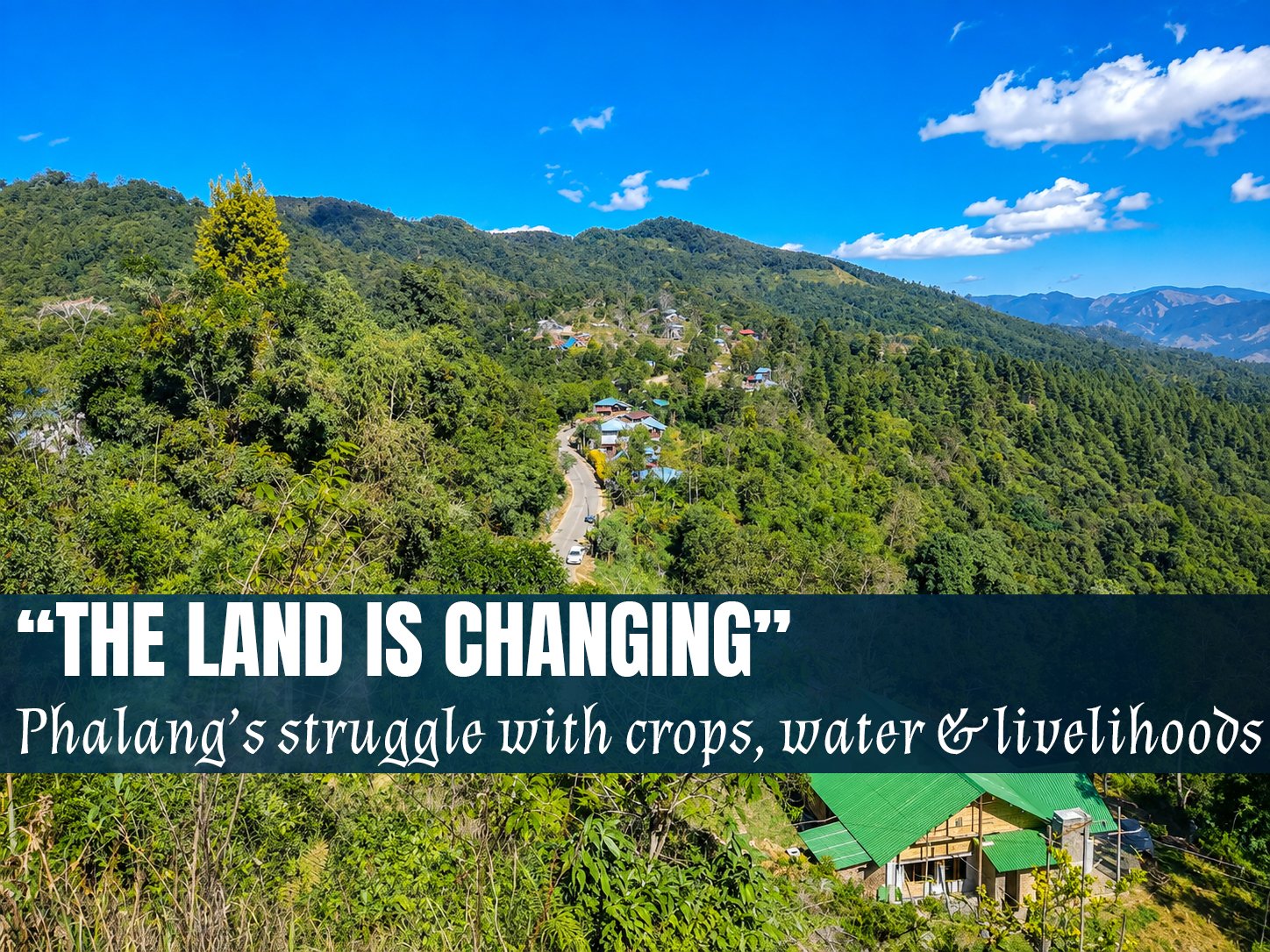
For generations, the people of Phalang have depended on the land around them to grow food, earn a livelihood and sustain their community. But the relationship between the villagers and their land is changing.
Declining fruit production, increasing pest attacks, unstable terrace farming, changes in water availability and growing dependence on forest resources are creating new challenges for farmers in the village.
This year, many villagers who once practised terrace farming have returned to jhum, or shifting cultivation, after finding terrace farming increasingly difficult to sustain.
For a community whose livelihood has long been rooted in agriculture, the shift is not merely a change in farming practice. It reflects the narrowing options available to farmers as they struggle with crop failures, pests and changing environmental conditions.
One of the most striking examples is parkia, a fruit that was once an important source of income for families in Phalang.
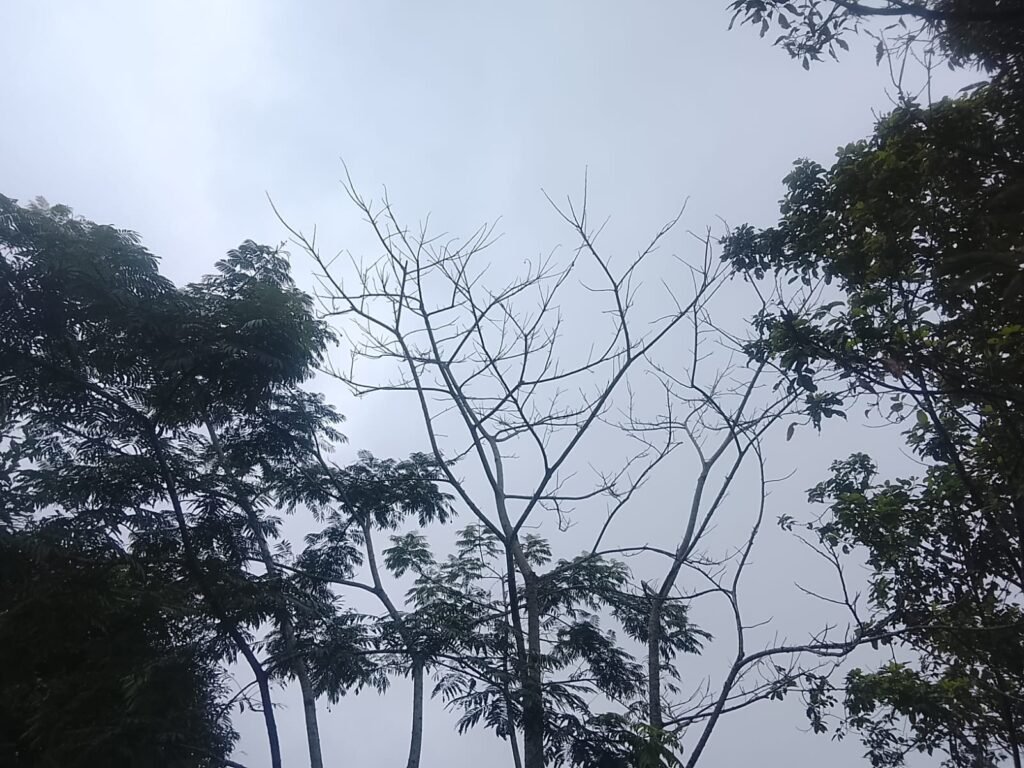
Villagers recall that parkia cultivation once generated around ₹80,000 a year. But after 2013, production began to decline sharply. Farmers planted new saplings in an effort to revive the crop, but many failed to survive, while others stopped producing fruit and eventually died.
Some experts have suggested that the buds may have been affected by pests, although the exact cause of the decline has yet to be scientifically established.
The disappearance of parkia has had a direct impact on household livelihoods.
Avinao Rungsung, 43, wife of Phalang village secretary Willson Rungsung, 48, said her husband established a farm about two decades ago, planting around 40 parkia trees in the field and another six in the compound of their house.
At the time, she said, the trees generated approximately ₹1 lakh a year.
But gradually, the trees stopped bearing fruit and began to die. By last year, she said, almost all of their parkia trees had died.
The family, like many others in the village, turned to alternative crops. Lemon and orange cultivation began around 2020, but these crops too have come under attack from pests.
Avinao said villagers have been forced to use traditional methods to deal with the infestations, including injecting kerosene or diesel into holes made by pests.
This year, she also returned to jhum cultivation and witnessed another serious problem. According to her, pest attacks on rice have increased considerably. During the early growth stage, pests attacked the leaves, while later they began attacking the stems.
Her chilli crop suffered a similar fate.
Avinao planted around 1,500 king chilli plants, but when the plants began producing fruit, she said, they died in large numbers.
Such losses are becoming a serious concern for farmers already struggling to maintain their agricultural livelihoods.
The changes are also visible to residents who have lived in Phalang for decades.
Lingkami Shokwungnao, 53, originally from Tashar village, migrated to Phalang in 1997, when he was just 24 years old. Nearly three decades of living in the village have given him a long view of the changes taking place around him.
When he first arrived, Lingkami said, Phalang had highly fertile soil and was particularly suitable for banana cultivation. Banana production was good and farming conditions were more favourable.
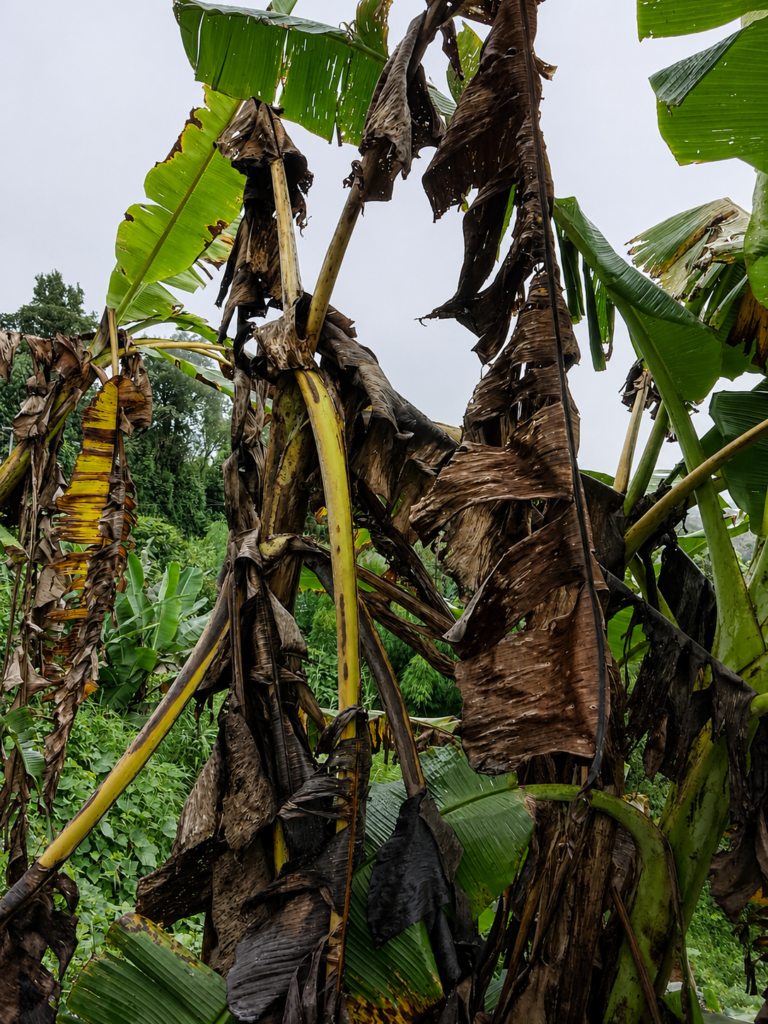
Today, he said, banana cultivation has become increasingly difficult. The stems of newly planted banana trees sometimes turn yellow, but farmers are unable to determine whether the problem is caused by disease or pests. Eventually, the trees die on their own.
Lingkami also remembers a time when both jhum and terrace cultivation produced better results.
When he came to Phalang in 1997, he said, spring water was available more reliably and arrived at the right time for cultivation. Today, he said, the timing and availability of spring water have become less predictable, forcing many villagers who once practised terrace farming to return to jhum cultivation.
He also recalled that jhum farming once produced satisfactory harvests without the same dependence on fertilisers that farmers face today.
According to Lingkami, rice production is now poor without fertiliser, while pest attacks have also increased.
The change in water supply has added another concern. Phalang now receives water from Leishi village. Although the village currently has adequate water and is not facing a major shortage, Avinao said the water contains a high amount of lime, making it hard and difficult to use.
For Lingkami, the contrast between the Phalang he encountered in 1997 and the village he sees today is stark.
“The Phalang I saw in 1997 is not the same Phalang today,” he said, describing changes in soil fertility, crop production, water availability and farming conditions.
The observations of villagers cannot, by themselves, establish that climate change is responsible for these changes. However, they highlight a pattern of environmental and agricultural changes that warrants closer scientific investigation.
The pressure on agriculture is occurring alongside an important community effort to protect the forest.
Since 2016, around 247.102 acres of forest have been protected for wildlife conservation. Villagers say the forest supports deer, wild boar etc. while sightings of pangolins and porcupines have also noticeably increased.
The conservation effort has helped create a refuge for wildlife, but it has also exposed a difficult reality: the same forest the community is trying to protect remains an important source of livelihood and fuel.
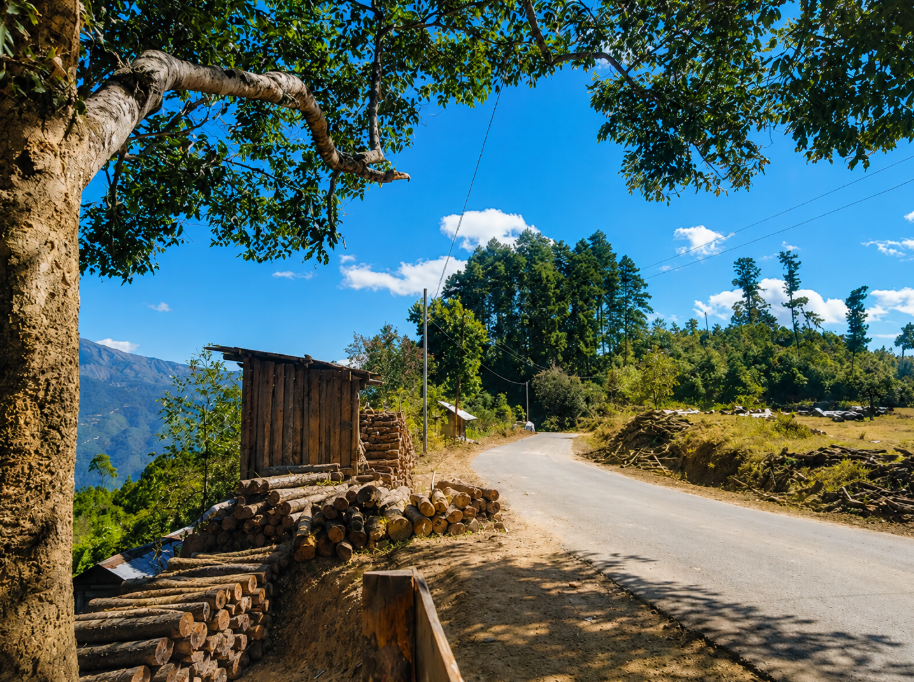
For some families, forest resources continue to provide an income, particularly through pinewood and firewood.
Winner Makan, 56, said cutting pine trees and processing the wood into planks for sale has become one of the few available sources of income for villagers. At the same time, he said the village has been trying to discourage deforestation and is searching for alternative livelihood opportunities.
The situation presents a difficult challenge for Phalang. The community wants to protect its forest and wildlife, but limited livelihood opportunities continue to push people towards the resources the forest provides.
Government plantation programmes have also attempted to support conservation and compensate for trees affected by landslides.
Chinaochung Makung, 65, said the Forest Department provided saplings to villagers and also paid wages for plantation work. While some of the saplings survived, many others died.
He said oak trees were among those that survived better, while some of the saplings supplied by the department appeared to have been provided outside the appropriate planting season.
The villagers were initially concerned that government-supported plantation activities might eventually affect their ownership of the land. Makung said officials later explained that the land would remain with the villagers and that compensation would be provided for trees damaged or uprooted by landslides.
Avinao also said the Forest Department provides saplings to compensate for trees affected by landslides and pays villagers for plantation work. However, she noted that the village wage rate has now reached ₹500 a day, while the department pays ₹300 a day for plantation work.
The experience has raised another concern for villagers: planting trees is only the first step. The survival of those trees is equally important.
For a landscape facing environmental pressures, plantation programmes need suitable species, appropriate planting seasons, proper maintenance and long-term community participation.
Phalang’s experience reflects a broader challenge facing rural communities confronting environmental uncertainty. Agriculture, water, forests and livelihoods are closely connected, meaning a change in one can place pressure on the others.
The decline of parkia has pushed farmers towards other crops. Lemon and orange cultivation have emerged as alternatives, but pest attacks have created new difficulties. Banana cultivation, once productive, is reportedly facing unexplained plant deaths. Terrace farming has become increasingly difficult, prompting a return to jhum cultivation, while dependence on forest resources continues despite efforts to protect the forest.
These developments cannot automatically be attributed to climate change. Changes in temperature, rainfall, water availability, growing conditions and pest behavior can have multiple causes. But they are precisely the kinds of changes that require closer monitoring and scientific assessment as communities adapt to a changing environment.
For Phalang, the need is therefore not simply for more crops or more trees. Farmers need access to scientific agricultural assistance, climate-resilient crop varieties, better pest-management support and research into the decline of crops such as parkia and banana.
At the same time, alternative livelihood opportunities are essential if the community is to reduce its dependence on forest resources while continuing to protect its wildlife habitat.
The people of Phalang have already begun adapting. They have experimented with new crops, returned to traditional cultivation, protected forest land and searched for new sources of income.
But adaptation has limits when choices are limited.
For Lingkami, the changes are measured against nearly three decades of personal experience. The fertile soil, productive banana farms, reliable spring water and satisfactory harvests he remembers from 1997 have been replaced by a landscape where farmers face growing uncertainty.
His recollection gives a human face to the environmental changes being discussed in increasingly scientific terms.
For a village that once found prosperity in its parkia orchards and sustenance in its forests, the challenge now is to ensure that the next generation can continue to live from the land without exhausting it.
Phalang’s experience shows that climate resilience is not only about protecting the environment; it is also about protecting the livelihoods of the people who depend on it.
This report is produced under the joint initiative of Media Resource Centre (MRC), Directorate of Environment & Climate Change (DE&CC) and Ukhrul District Working Journalists’ Association (UDWJA).








 Users Today : 91
 Total Users : 98299