



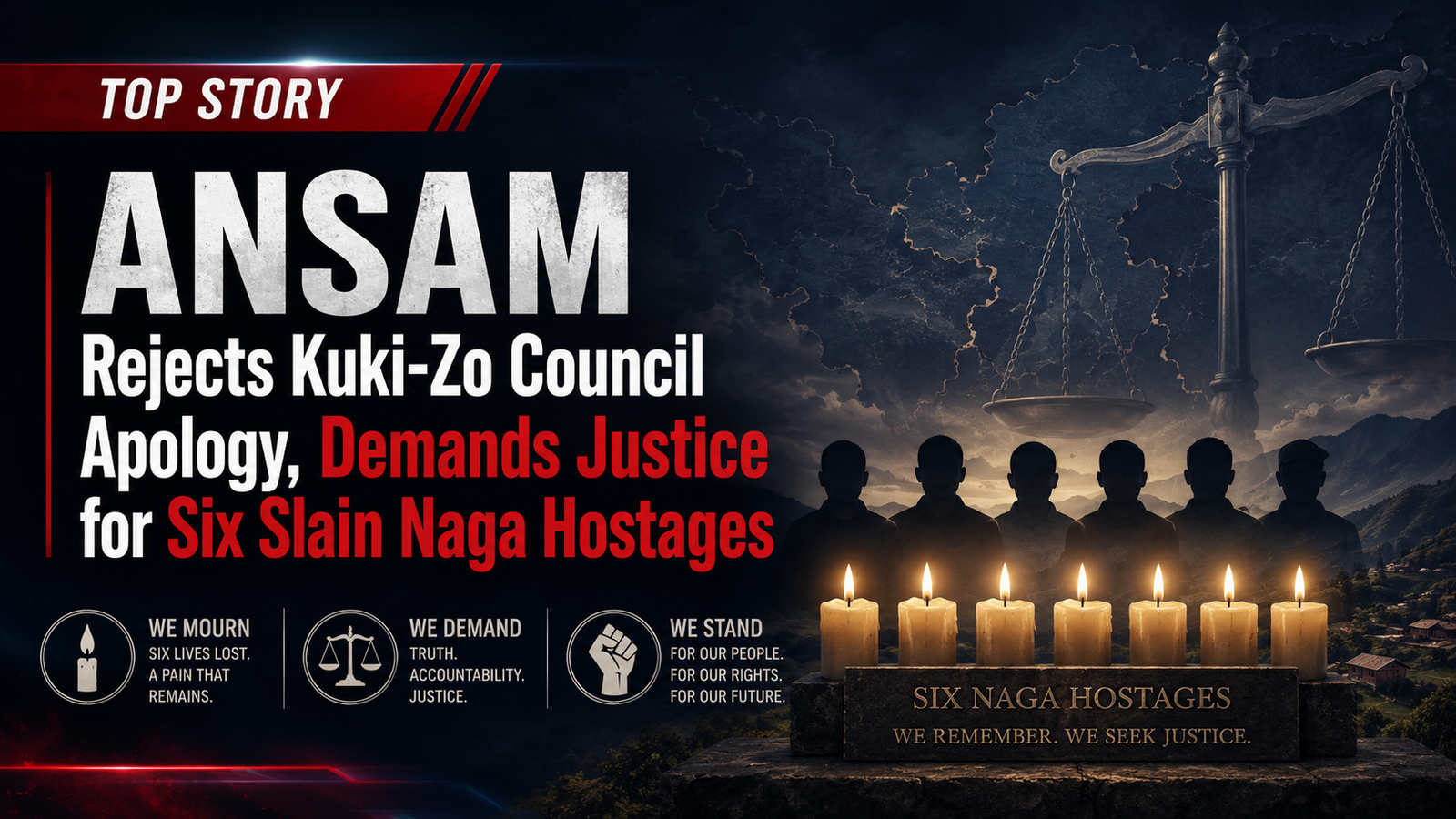
Senapati, June 25, 2026: The All Naga Students’ Association, Manipur (ANSAM) has strongly rejected the apology issued by the Kuki-Zo Council in connection with the killing of six Naga hostages, stating that the statement does not amount to a genuine apology or an admission of responsibility.
In a press release issued on June 25, ANSAM said the apology failed to acknowledge the alleged abduction, torture and brutal killing of the six Naga civilians. The students’ body alleged that the crime was committed by KNF(P) cadres and Leilon Vaiphei Kuki villagers on May 13, 2026.
ANSAM also objected to the use of what it described as derogatory language against the Naga people in the statement, saying such remarks had deeply hurt Naga sentiments and undermined the dignity, history and identity of the community.
The association asserted that no apology could be considered sincere or acceptable until those responsible for the abduction and killing are identified, arrested and punished under the law. It said justice cannot be replaced by symbolic statements or declarations without legal accountability.
ANSAM further sought clarification on whether the apology was issued on behalf of those directly involved in the incident, or whether the Kuki-Zo Council itself had any association with the crime. It also questioned whether the council had the mandate to speak on behalf of all communities under the Kuki-Zo nomenclature.
The students’ body also reiterated that Nagas had no involvement in the killing of three Thadou church leaders, stating that the incident reportedly occurred between Kotzim and Kotlen Kuki village areas, where Nagas had neither access nor influence.
ANSAM urged both the Government of Manipur and the Government of India to act with urgency and ensure that those involved in the killing of the six Naga hostages are brought before the law. It also called for serious consideration of the charter of demands submitted by the United Naga Council.
The association said it stands in solidarity with the bereaved families and the Naga people in their pursuit of truth, justice and accountability, adding that genuine reconciliation can only come through truth, respect for identity, accountability and the rule of law.










 Users Today : 65
 Total Users : 81730