


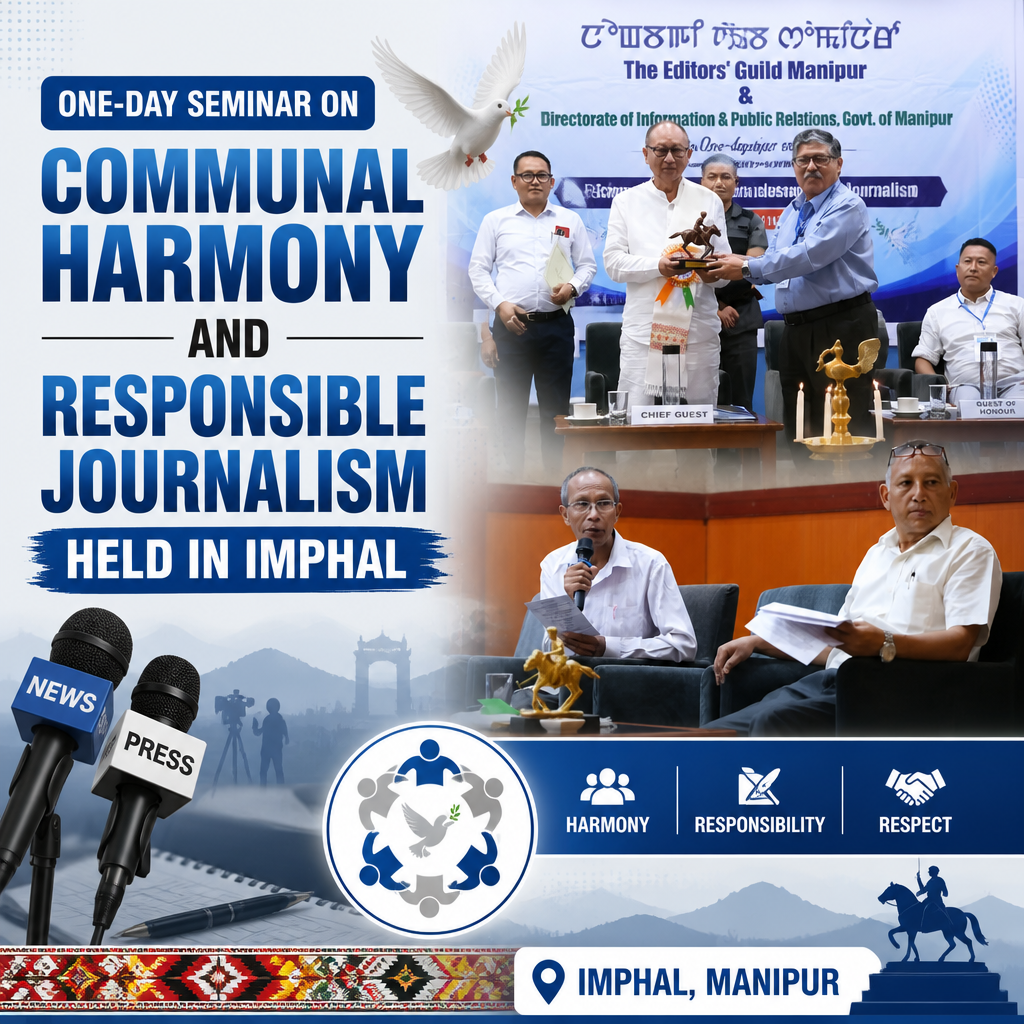
Imphal, June 8: In a significant initiative aimed at promoting ethical journalism and fostering communal harmony in Manipur, a one-day seminar on “Media for Communal Harmony and Responsible Journalism” was held on Monday at Sangai Hall, Hotel Imphal. The seminar was jointly organized by the Editors’ Guild Manipur (EGM) and the Directorate of Information and Public Relations (DIPR), Government of Manipur. The event brought together senior journalists, media professionals, government officials, academicians, and students to deliberate on the role of the media in conflict-sensitive environments and the importance of responsible reporting.
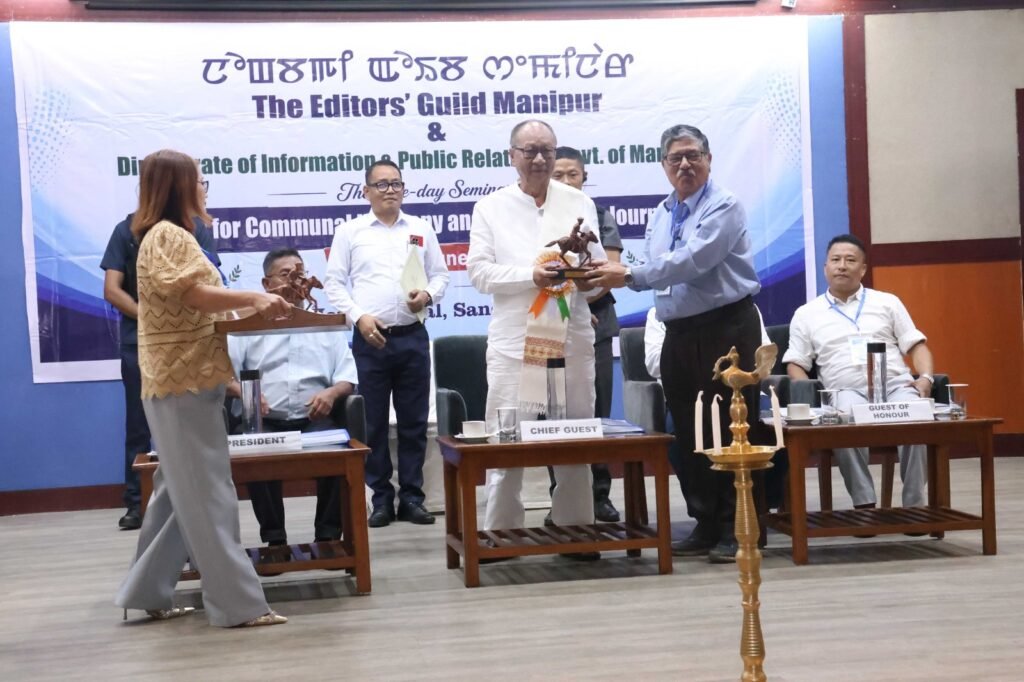
The seminar was inaugurated by the Chief Minister of Manipur, Yumnam Khemchand Singh, underscoring the government’s commitment to strengthening media institutions and encouraging constructive journalism in the state.
Delivering the welcome address, DIPR Director Dr. Th. Charanjeet Singh expressed his gratitude to the Chief Minister for inaugurating the seminar and emphasized the importance of such discussions in shaping the future of journalism in Manipur. He stated that the insights, deliberations, and resolutions emerging from the seminar would provide a new direction to the media fraternity and contribute positively toward the overall development of the state. He noted that the media serves as a bridge between the government and the public and therefore carries a significant responsibility in maintaining peace and social harmony.
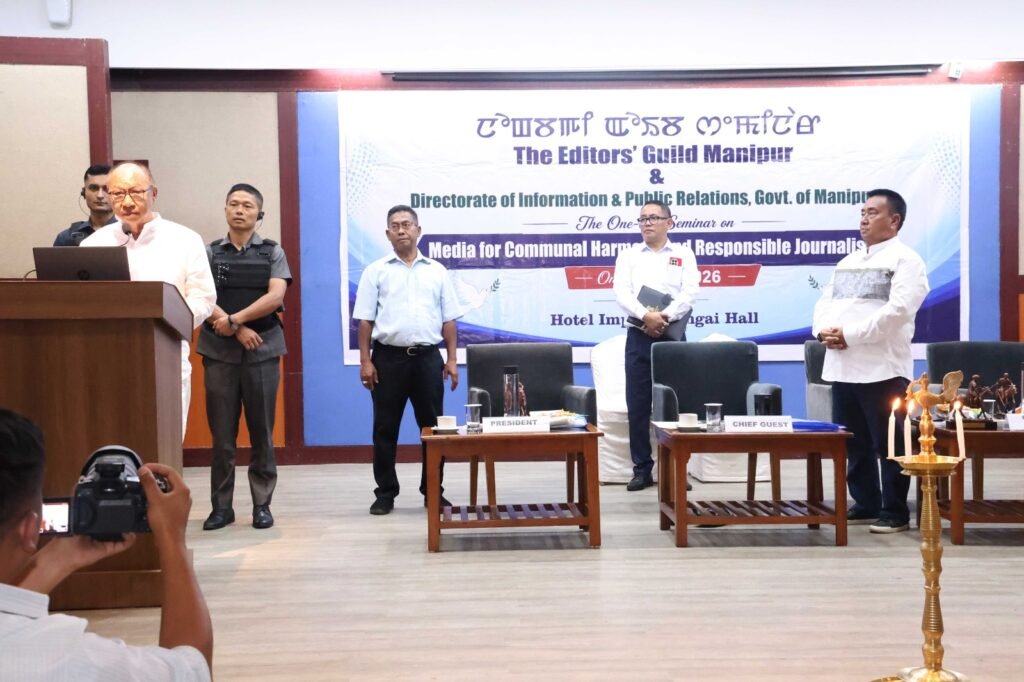
In the keynote address, Rinku Khumukcham highlighted the relevance of the seminar in the current socio-political context of Manipur. He stressed that the media plays a crucial role in shaping public opinion and influencing societal attitudes. According to him, journalists must regularly reflect upon their ethical obligations and professional responsibilities to ensure that reporting remains factual, balanced, and constructive. He observed that seminars of this nature provide an important platform for media practitioners to exchange ideas, review challenges, and strengthen their commitment to responsible journalism.
Speaking on the need to strengthen media institutions in Manipur, Oinam Sunil Singh underscored the importance of reinforcing the role of both the media and the Directorate of Information and Public Relations. He emphasized that local media narratives must be strengthened so that the realities of Manipur are represented accurately. He expressed concern that perceptions about the state are often shaped by external narratives and asserted that local journalists should play a leading role in presenting balanced and authentic accounts of developments in Manipur. He urged media organizations to work collectively to enhance the credibility, effectiveness, and influence of the state’s media sector.
One of the major highlights of the seminar was the address delivered by Peter Adani, who called for a comprehensive and stringent policy framework to address the issue of illegal immigration in Manipur. He observed that states such as West Bengal, Tripura, and Assam have implemented measures under existing laws to tackle illegal immigration and argued that Manipur requires stronger and more specific mechanisms considering its unique socio-political circumstances. He maintained that effective government policies could help address a range of concerns, including law and order issues, drug trafficking, and other social challenges. He further urged policymakers and government officials to engage in serious deliberations and formulate appropriate policies in the interest of the state and its people.
The seminar also featured a series of technical sessions focusing on contemporary challenges faced by the media. The pre-lunch session was moderated by retired IAS officer Dr. R.K. Nimai. During this session, Dr. Mayengbam Veto, Joint Secretary of the Home Department, Government of Manipur, delivered a presentation on “Decoding Media Advisory by Manipur Government Home Department.” The presentation sought to explain the rationale behind media advisories and the importance of responsible communication during sensitive situations.
Another important presentation was delivered by Dr. S. Ibomcha, Commanding Officer of the 6th IRB and SP (Special Commando), who spoke on “Combating Misinformation, Rumours and Hate Speech in the Digital Era.” He highlighted the growing threat posed by misinformation and fake news on digital platforms and stressed the need for journalists and citizens alike to verify information before dissemination. He emphasized that unchecked rumours and hate speech have the potential to escalate tensions and undermine peace in society.
Adding an academic perspective to the discussions, Natasha Elangbam, Associate Professor in the Department of Mass Communication at Manipur University, delivered a lecture titled “Journalism for Peace: Lessons, Challenges and Best Practices from Conflict Regions.” She shared insights into the role of journalism in conflict-affected societies and discussed how responsible reporting can contribute to reconciliation, trust-building, and long-term peace.
The post-lunch session was moderated by senior journalist A. Mobi and focused on reporting during periods of communal tension and conflict. During this session, Yumnam Rupachandra, who is also the Editor-in-Chief of Impact TV, presented a paper on “Responsible Reporting During Communal Tension and Conflict Situations.” He discussed the ethical responsibilities of journalists during sensitive situations and emphasized the need to avoid sensationalism, verify facts rigorously, and ensure that reporting does not contribute to further divisions within society.
The inaugural function was attended by several prominent figures from the media fraternity, including Ashem Bhakta and Peter Adani as Guests of Honour. The programme was presided over by Khogendra Khomdram. Also present were Additional Directors of Information and Public Relations, W. Phajatombi Devi and T. Ramesh Singh, along with senior editors, journalists, officials of DIPR, representatives from various media organizations and platforms, and students from Manipur University.
The seminar concluded with a collective call for strengthening ethical journalism, promoting communal harmony, combating misinformation, and enhancing the role of media as a constructive force in society. Participants expressed hope that the discussions and recommendations emerging from the seminar would contribute to building a more responsible and peace-oriented media environment in Manipur.






 Users Today : 46
 Total Users : 66485